 How-to
How to Identify Expired Pet Food Safely at Home
Last Updated: November 8, 2026
Quick Summary
Check the printed date on the bag or can, usually on the bottom gusset, back panel, lid, or seal, and look for labels such as Best By or Use By. Then inspect the food for rancid odor, mold, moisture, insects, or damaged packaging before serving. Discard any expired pet food that shows these signs or whose date you cannot verify.
- Look for the date on the bottom gusset, back panel, can lid, or pouch seal.
- Best-by dates are quality markers, while use-by dates are firmer deadlines.
- Discard food with mold, pests, moisture, rancid smell, or a bulging can.
- Opened dry food tends to lose quality faster, so use an airtight container.
- If your pet ate expired food, watch for vomiting, diarrhea, or lethargy and call your vet.
Table of Contents
- Why Checking Pet Food Dates Matters
- Step 1: Find the Date on the Bag or Can
- Step 2: Tell Best-By Dates Apart From Manufacture Dates and Lot Codes
- Step 3: Check Shelf Life for Dry, Wet and Canned Food
- Step 4: Inspect Food for Spoilage Signs
- What to Do If Your Pet Ate Expired Food
- Checking Your Pantry Before Your Next Refill
- Frequently Asked Questions
Why Checking Pet Food Dates Matters
Pet food does not last forever, and an expired pet food bag can lose nutrients, change in smell, or grow mold.
Many owners assume food that looks fine is safe, but fats in dry kibble can oxidize and added vitamins can break down even when nothing looks wrong. The printed date is the best starting point for judging freshness.
Here is what this guide covers:
- Where to find the date on bags and cans
- How to tell best-by dates from manufacture dates and lot codes
- How long different food types usually last
Step 1: Find the Date on the Bag or Can
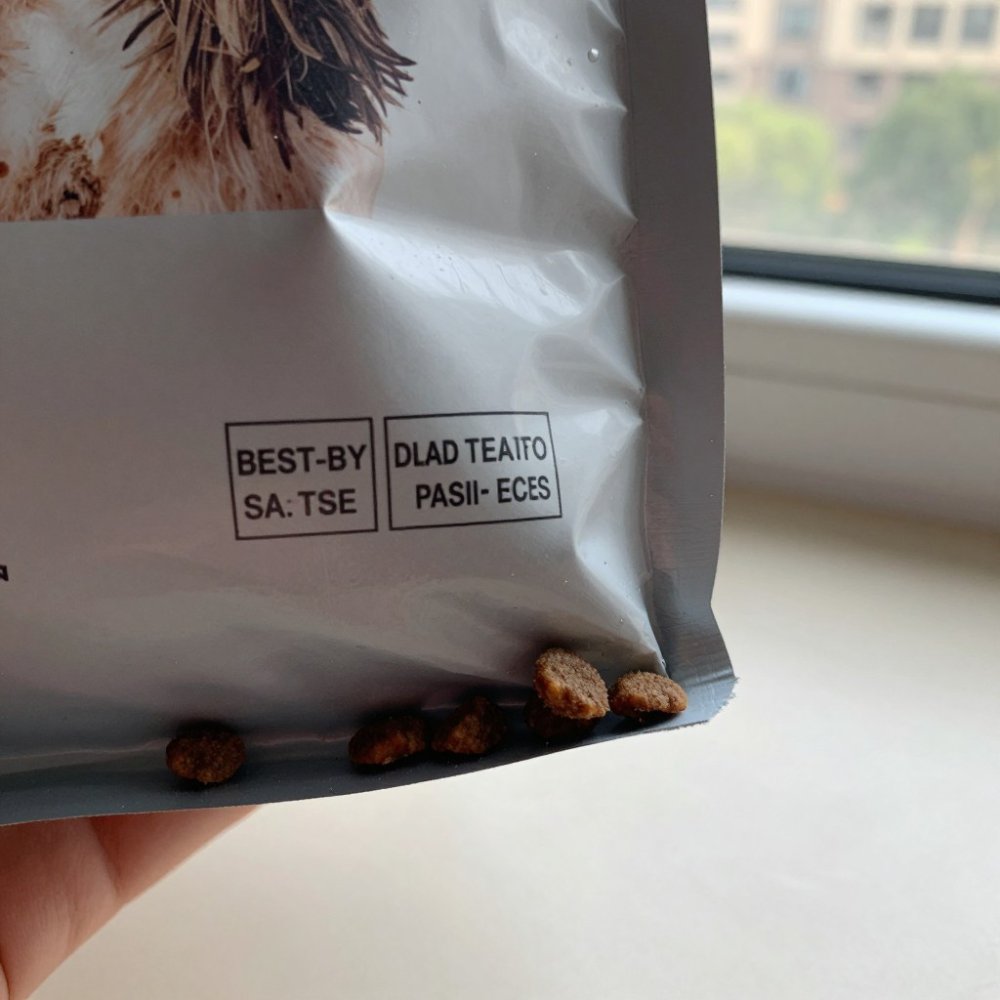
Start by locating the printed date. On most packages it is stamped, ink-jetted, or embossed in one of a few predictable places. Work through this checklist in order, because the date is often on the least obvious panel.
- Dry food bags: Check the bottom gusset (the folded base), the back panel near the bottom seam, and the area just below the zipper or heat seal. Many brands print a "Best By" date plus a lot code on the same line.
- Canned food: Look on the lid (top or bottom) and along the side of the can near the base. Cans usually carry an embossed or ink-jetted code rather than a spelled-out date.
- Pouches and tubs: Check the back or side panel, the bottom seal, and the lid film. Pouches often print the date on the crimped seal itself.
Decoding the Date Format, Step by Step
Once you find the print on expired pet food packaging, decode it in this order:
- Look for a spelled-out label first. Words like "Best By," "Best Before," "Use By," or "Exp" confirm the number is a date, not a lot code.
- Identify the format. Common formats are MM/DD/YYYY, DD/MM/YYYY, and YYYY/MM/DD. A two-digit year (e.g., "26") usually means 2026. If the first number exceeds 12, it is a day, not a month.
- Separate the date from the lot code. Lot codes are longer alphanumeric strings printed beside or below the date; the date portion is the shorter, date-like run.
- Check for a Julian date. Some manufacturers use a three-digit day-of-year code (001-365) plus a year. For example, "2026 045" means the 45th day of 2026 (mid-February).
- Confirm with the manufacturer's key. If the format is still unclear, search the brand's website for "date code" or call customer service with the full string.
What to Do When the Date Is Missing, Smudged, or Unreadable
A missing or illegible date is common on dented cans, worn bags, and packages that have been handled a lot. Do not guess. Use this decision path:
- If part of the code is readable: Contact the manufacturer with the product name, size, and any visible digits; they can often decode the batch from a partial lot code.
- If nothing is readable: Check your receipt or order confirmation for the purchase date. Recently bought, properly stored food is likely still within its window, but you cannot confirm it.
- If you cannot verify freshness with confidence: Discard the food. The cost of a bag is small compared with the risk of feeding spoiled food.
Watch out: a date printed on the outer bag does not guarantee the inner seal is intact. If the bag is torn, damp, or has been stored in a hot car, treat it as suspect even if the date looks valid.
Best-By vs. Manufacture Date vs. Lot Code: A Quick Decoder
Packages often show more than one number. Our guide to reading pet food labels goes deeper on decoding packaging. Here is how to tell them apart at a glance:
- Best-by / best-before: A quality date, not a strict safety cutoff.
- Use-by: A firmer deadline; do not feed the product after this point.
- Manufacture date (MFG / PROD): The production date, useful for judging age but not expiry.
If two numbers appear and neither is labeled, the shorter, date-like one is usually the best-by date and the longer alphanumeric string is the lot code. When in doubt, contact the manufacturer rather than assuming.
Step 2: Tell Best-By Dates Apart From Manufacture Dates and Lot Codes
Packaging can show several different numbers, and they mean different things. Mixing them up can lead to wrong decisions.
- Best-by or best-before date: The date until which the food keeps its best quality; a quality marker, not always a strict safety cutoff.
- Use-by date: A firmer deadline after which the product should not be fed.
- Manufacture date: The day the food was produced; helps judge age but not expiry.
When you see more than one number, look for the label that states its purpose. If the purpose is unclear, contact the manufacturer.
Step 3: Check Shelf Life for Dry, Wet and Canned Food
Shelf life varies a great deal by food type. The general patterns below are qualified, since exact timing depends on formulation, storage, and packaging.
- Dry food: Typically keeps well while sealed, often for many months. Once opened, its quality tends to decline faster, especially in humid conditions.
- Wet or pouched food: Usually has a shorter window after opening and should be refrigerated and used within the time the label recommends.
- Canned food: Often lasts a long time sealed, but a can that is dented, bulging, or leaking should not be fed.
How Long Dry Dog Food Lasts in an Airtight Container
Many owners transfer dry food into a storage container. Our guide to storing dry dog food offers practical tips to extend its freshness. An airtight container keeps out moisture and pests and slows freshness loss.
Keep the container in a cool, dry place away from direct sunlight.
Shelf life varies by food type, so here is a quick reference for the general patterns described above.
| Food type | General shelf life | Key note |
|---|---|---|
| Dry food (sealed) | Many months | Keeps well while sealed |
| Dry food (opened) | Declines faster | Humidity speeds decline |
| Wet or pouched food (opened) | Shorter window | Refrigerate and use within label time |
| Canned food (sealed) | Long time | Discard if dented, bulging, or leaking |
Step 4: Inspect Food for Spoilage Signs
Even within the date window, inspect the food before serving, since spoilage can start early if storage conditions were poor. Our full safety guide to spotting expired pet food covers more warning signs to check. These checks help you judge borderline cases rather than guess.
Odor, Color, Texture, and Mold Checks
Use your senses in a fixed order so you do not miss a cue:
- Smell: Rancid, sour, or musty odors mean fats have oxidized or microbes have grown. Fresh kibble should smell like its ingredients, not old oil or paint; a sharp, acrid note is a strong warning sign.
- Color: Dark patches, unusual discoloration, or a faded, grayish look can signal oxidation or moisture damage. Uniform color is normal; blotchy color is not.
- Texture: Unusual clumping, a greasy surface, or a stale, crumbly feel may point to age or moisture migration. Kibble sticking together often means moisture entered the bag.
Moisture, Insects, and Damaged Packaging
Packaging problems can cause spoilage even when the date is valid. Watch for:
- Moisture or condensation inside the bag or can, or a damp feel to the kibble. Moisture is the main driver of mold and bacterial growth in dry food.
- Small holes, tears, or chew marks that let in air or pests; even a pinhole lets in moisture and insects over time.
- Insects, larvae, or webbing in or around the food. Pantry moths and beetles can infest dry food and spread quickly to other packages.
Watch out: a can that is bulging, leaking, or smells foul when opened should be discarded without tasting or feeding, even if the date is far in the future. Bulging usually means gas-producing bacteria are present.
The Mechanism: Why Spoilage Happens Before the Date
In dry kibble, fats oxidize when exposed to oxygen and heat, so an opened bag in a warm pantry can go rancid well before its best-by date. Moisture migration from humid air drives mold growth and clumping. In canned and wet food, the seal is the main barrier; once compromised, bacteria multiply quickly even under refrigeration.
What to Do If You Find Spoilage
- Discard the food in a sealed bag so pets and wildlife cannot get to it. Do not compost moldy pet food.
- Keep the packaging and lot code if you suspect a manufacturing defect, such as mold in a newly opened, undamaged bag.
- Clean the storage area with hot, soapy water and dry it thoroughly before adding new food, especially if you found insects.
If the spoilage looks like a batch defect rather than a storage problem, contact the manufacturer with the lot code and consider reporting it to the relevant food-safety authority in your country.
What to Do If Your Pet Ate Expired Food
Sometimes an owner only realizes after a meal that the food was past its date. Many pets handle a single meal of slightly old food without trouble, but the response depends on the food and the animal.
- Stop feeding the suspect food and switch to a fresh supply
- Watch for changes in appetite, energy, or bathroom habits over the next day or two
- Keep the bag or can, and note the date and lot code if visible
This guide is general information, not veterinary advice. For a pet with a health condition, check with your vet before making feeding changes.
Checking Your Pantry Before Your Next Refill
A quick pantry check helps you avoid expired food before it reaches the bowl. Our complete guide to storing bulk pet food explains how to keep large purchases from expiring in the first place.
- Read the date on every bag and can
- Move older food to the front so it gets used first
- Discard anything with mold, pests, damage, or a strong odor
Buying in smaller quantities can help you use food before it ages, and checking dates when you reorder keeps your supply fresh. Our guide to avoiding expired pet food when buying online lists what to check before you reorder.
Frequently Asked Questions
How do I find the expiration date on pet food?
Look on the bottom, back, or near the seal of the bag or can. Words such as "Best By" or "Use By" usually mark the date. Some brands use a code, so check the manufacturer's key if the date is not written out.
Is pet food safe after the best-by date?
The best-by date is mainly a quality guide. Food past that date may be less nutritious or less fresh, but spoilage signs matter more. Inspect the food and discard it if it smells off or shows mold or pests.
What if the date on my pet food is unreadable?
Contact the manufacturer with the product name and any partial code. If you cannot verify freshness, it is safer to discard the food.
How long does opened dry pet food last?
Opened dry food tends to lose quality faster than sealed food. Store it in an airtight container in a cool, dry place and follow the manufacturer's guidance for your specific product.
What should I do if my dog ate expired food?
Stop feeding that food, monitor your dog for changes, and contact your veterinarian if you notice vomiting, diarrhea, lethargy, or loss of appetite.
Frequently Asked Questions
How do I read a coded expiration date on pet food?
Many pet food packages use a code instead of a plain date. Look for a string of numbers or letters, often near the seal, the bottom of the bag or the lid of a can. The code usually includes the production date and sometimes the plant or line number. Check the manufacturer's website or customer service line for their code format, since each brand uses its own system. If you can decode the production date, add the shelf life printed on the label to find the best-by date. Keep a photo of the code on your phone so you can check it later.
Does dry dog food expire if it is unopened?
Yes. Unopened dry dog food still has a best-by date because fats in the kibble slowly oxidize and vitamins degrade over time, even in a sealed bag. Manufacturers usually set that date with the packaging intact and stored in a cool, dry place. Food past its date may still be safe to feed in many cases, but its nutritional value and freshness can decline. If the bag is intact and shows no moisture, odor or insects, a short overrun is less of a concern than an opened bag stored poorly.
How long is dog food safe after the expiration date?
There is no fixed safe window. Dry food past its best-by date often remains safe to feed if it is sealed, stored properly and passes a smell and visual check, but it may have lost some nutrients and palatability. Wet and canned food is more sensitive to spoilage and should be discarded if the date has passed and the can is bulging, dented or leaking. When in doubt, discard the food and replace it, and contact the manufacturer if you have concerns about a batch.
What should I do if pet food does not have an expiration date?
Check the bag or can again for a lot code or production date, since some products only print a code. If there is no date at all, contact the manufacturer with the product name, the lot code if you can find one and the store where you bought it. Without a date, judge the food by its smell, appearance and packaging condition, and avoid feeding anything that smells rancid, sour or musty, shows mold or insects, or has torn packaging. Store unlabeled food in an airtight container and use it within a few weeks of purchase as a precaution.