 Ultimate guide
How to Read Pet Food Labels: A 2026 Guide
Table of Contents
- Why Reading Pet Food Labels Matters
- Understanding the Product Name and Required Label Information
- Decoding the Ingredient Statement: Order and Quality
- What Is the 95% Rule in Dog Food and Pet Food Labeling
- Reading the Guaranteed Analysis: Crude Protein, Fat, and Fiber
- Interpreting the AAFCO Nutritional Adequacy Statement
- Pet Food Label Red Flags: What to Avoid
- Feeding Guidelines and Net Quantity: Practical Information You Need
- Frequently Asked Questions
Last Updated: October 2, 2026
Why Reading Pet Food Labels Matters
Learning to read pet food labels is essential: most pet owners skip them entirely, focusing only on marketing claims, yet what's actually in the bag often differs dramatically from packaging promises.
Reading labels lets you compare products fairly, identify hidden ingredients, and spot marketing tricks. Poor nutrition choices lead to digestive issues, allergies, weight problems, and costly long-term health complications. Consistent vigilance remains just as vital when evaluating dog treat labels, as these supplemental snacks often harbor the same fillers and additives that compromise a balanced diet.
The label is your contract with the manufacturer, telling you exactly what you're paying for and whether the product meets nutritional standards.
Understanding the Product Name and Required Label Information
The product name is the first place manufacturers use marketing language to influence your decision. According to AAFCO (Association of American Feed Control Officials) pet food naming guidelines, the product name must accurately reflect the primary ingredients, but the rules are more flexible than most owners realize.
"Chicken Dinner" requires 25% chicken; "Chicken" requires 95%; "Chicken Meal" is concentrated, dried protein counted differently than fresh meat. Understanding these thresholds prevents overpaying for foods with less of the main ingredient than the name suggests.
Required label information includes the manufacturer's name and address, net quantity, intended species, and feeding guidelines. Manufacturer contact details matter: if your pet reacts to the food, you need to reach the company quickly.
Look for the AAFCO nutritional adequacy statement, which confirms the food meets minimum standards for your pet's life stage (growth, maintenance, or all life stages).
Decoding the Ingredient Statement: Order and Quality
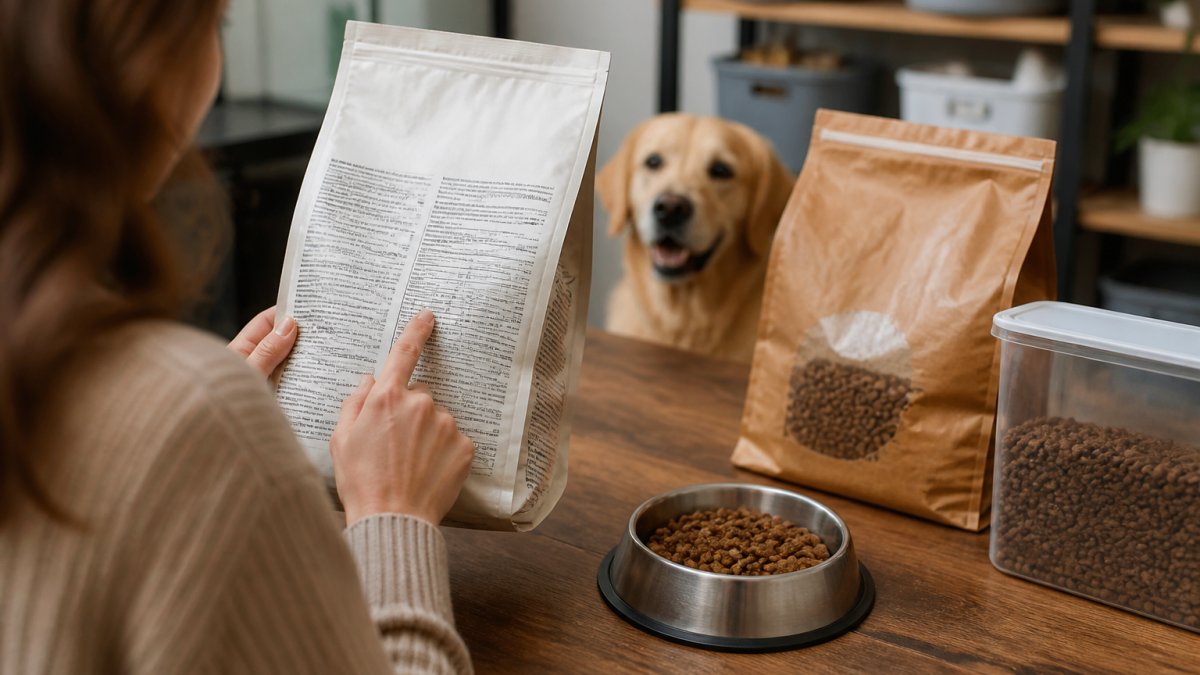
The ingredient statement lists components in descending order by weight, but weight includes moisture content, a critical detail most owners miss.
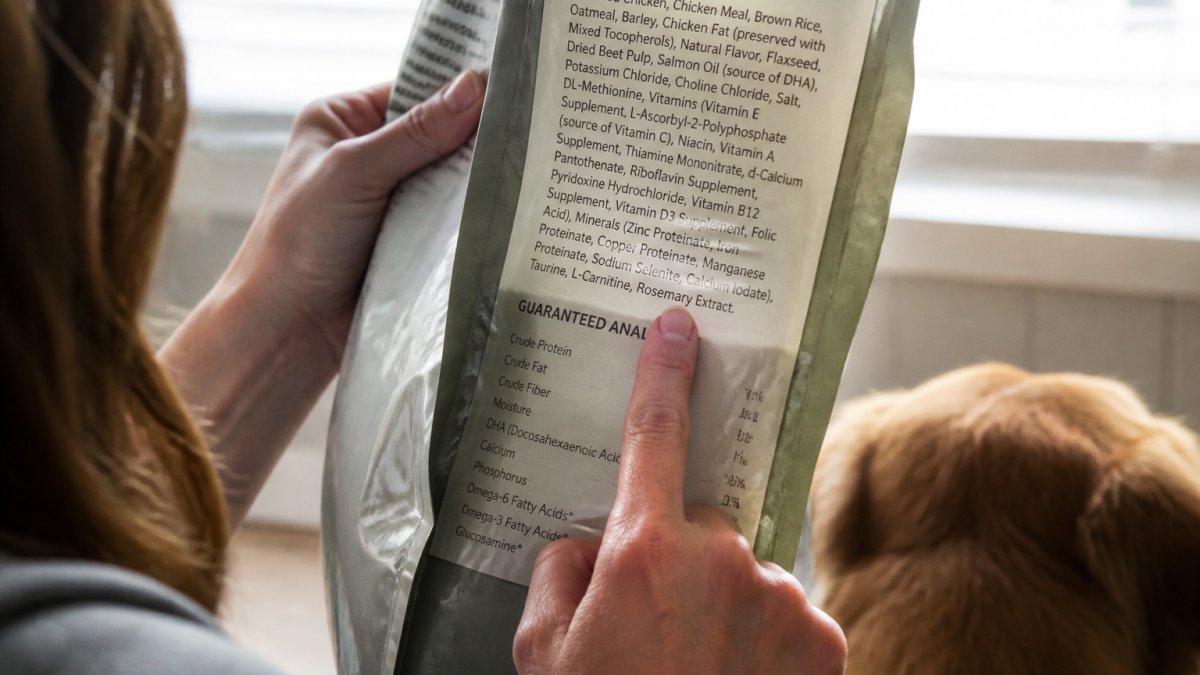
Fresh chicken contains roughly 70% water; once processed and dried, it shrinks dramatically. A food listing "chicken, chicken meal, corn, soybean meal" might contain more protein from the meal and plant sources than from the fresh chicken listed first.
The Ingredient Hierarchy Explained
Named meat sources (chicken, beef, lamb, fish) are identifiable animal proteins. Meat meals are rendered, dried animal proteins, actually more concentrated protein sources than fresh meat, despite sounding less appealing.
By-products are animal parts not typically consumed by humans (organs, beaks, hooves, connective tissue). Organ meats contain valuable nutrients, but the source is less defined and more variable, potentially altering the nutritional profile with each batch.
Plant-based proteins like corn gluten meal and soybean meal are cheaper sources less bioavailable to carnivores than animal proteins.
Meat vs. Meat Meal: What's the Real Difference?
Fresh meat contains significant water weight; meat meal is the same protein after water and fat removal. Meat meal contains roughly 3 times more protein per pound than fresh meat.
A food listing "chicken, chicken meal, corn..." might provide more total protein from the meal than the fresh chicken. Ingredient order reflects weight before processing, not nutritional contribution after.
The real quality difference is between named sources (chicken meal) and unnamed sources (poultry by-product meal). Named sources mean you know exactly what you're feeding.
What Is the 95% Rule in Dog Food and Pet Food Labeling
The 95% rule is one of the most important AAFCO regulations for understanding product names. If a food is called "Chicken Dog Food" or simply "Chicken," the product must contain at least 95% chicken (excluding water used for processing). This is the strictest naming standard.
Most foods don't meet this threshold because 95% chicken would be prohibitively expensive. Instead, manufacturers use the "25% rule": a product can be called "Chicken Dinner" with as little as 25% chicken by weight.
Between these extremes lies the "3% rule," which applies to foods listing multiple meat sources. A food called "Chicken and Beef Formula" must contain at least 3% of the secondary ingredient (beef, in this case).
Reading the Guaranteed Analysis: Crude Protein, Fat, and Fiber
The guaranteed analysis section lists the minimum percentages of crude protein and crude fat, plus the maximum percentages of crude fiber and moisture. These numbers tell you the food's basic nutritional composition, but they're not the complete story.
Understanding Dry Matter Basis for True Comparison
Here's where most pet owners make a critical mistake: comparing foods at their listed percentages without accounting for moisture. A wet food listing 10% protein and a dry kibble listing 25% protein might actually be nutritionally similar once you account for water content.
Interpreting the AAFCO Nutritional Adequacy Statement
Every pet food package must display an AAFCO nutritional adequacy statement confirming the food meets minimum standards for a specific life stage. This statement typically reads: "This food is formulated to meet the AAFCO Dog Food Nutrient Profiles for [life stage]."
Pet Food Label Red Flags: What to Avoid
Certain label patterns consistently indicate lower-quality foods or misleading marketing. Learning to spot these red flags saves you money and protects your pet's health.
Additives and Preservatives to Question
Artificial preservatives like BHA, BHT, and ethoxyquin have been linked to health concerns in some studies, though regulatory bodies maintain they're safe at permitted levels. Many premium manufacturers have moved to natural preservatives like mixed tocopherols (vitamin E) or rosemary extract. If artificial preservatives appear high in the ingredient list, that's worth noting.
Marketing Claims vs. Nutritional Reality
"Natural" is largely unregulated in pet food. It typically means the food contains no synthetic ingredients, but it can still contain low-quality animal by-products and plant-based fillers. "Natural" doesn't mean nutritious.
Feeding Guidelines and Net Quantity: Practical Information You Need
The feeding guidelines section tells you how much to feed based on your pet's weight. These are starting points, not absolute rules. Individual dogs vary in metabolism, activity level, and age, so you may need to adjust portions up or down based on your pet's body condition.
Frequently Asked Questions
In what order are ingredients listed on a pet food label?
Ingredients are listed by weight in descending order, from heaviest to lightest. The first ingredient makes up the largest portion of the food. This ingredient hierarchy is critical when evaluating nutritional content, as the first few ingredients form the foundation of the diet. Always check what's listed first, it should align with your pet's nutritional needs and your quality expectations.
What is the 95% rule in dog food and pet food labeling?
The 95% rule states that if a product name includes a specific ingredient (like 'beef dog food'), that ingredient must make up at least 95% of the product, excluding water. This rule applies to single-ingredient or dual-ingredient products. Understanding this rule helps you distinguish between products labeled 'beef' versus 'beef-flavored,' which have very different ingredient compositions and nutritional profiles.
What do AAFCO nutritional adequacy statements mean?
An AAFCO nutritional adequacy statement confirms that the food meets minimum nutritional standards for your pet's life stage (puppy, adult, senior, or all life stages). Look for phrases like 'Complete and Balanced' or 'Meets AAFCO standards.' This statement is your assurance that the food provides essential vitamins, minerals, proteins, and fats your pet needs. Foods without this statement may lack nutritional completeness.
What is the difference between 'meat' and 'meat meal' on a pet food label?
Meat is fresh or frozen muscle tissue, typically higher in moisture. Meat meal is processed, dried meat with moisture removed, making it more concentrated in protein. Both are legitimate protein sources, but meat meal is more shelf-stable and protein-dense. Neither is inherently better, the quality depends on the source and the overall formula. Check the ingredient list position to see how much of each contributes to the food.
How can I tell if a pet food is nutritionally complete and balanced?
Look for an AAFCO nutritional adequacy statement on the label, which confirms the food meets minimum nutritional standards. Check the guaranteed analysis for appropriate crude protein and fat levels for your pet's age and activity level. Ensure the ingredient list includes varied protein sources, fats, and recognizable whole foods. Compare the guaranteed analysis on a dry matter basis to fairly evaluate different foods' actual nutritional content.
What are the most important things to look for on a pet food label?
Start with the AAFCO nutritional adequacy statement to confirm completeness. Review the first few ingredients, they should be high-quality protein sources. Check the guaranteed analysis for protein, fat, and fiber levels appropriate for your pet. Look at the feeding guidelines to estimate daily costs. Finally, scan for red flags like vague ingredient names, excessive by-products, or artificial preservatives. These five areas give you a complete picture of food quality.
What pet food brands or ingredients should I avoid?
Avoid foods with vague ingredient names like 'meat by-products' or 'animal fat' without species identification, as these lack transparency about quality. Be cautious with foods listing multiple artificial preservatives, colors, or flavors. Products with corn, soy, or wheat as primary ingredients may not suit all pets, especially those with sensitivities. Always verify the AAFCO statement is present. If your pet has specific health needs, consult your veterinarian before switching foods, as individual sensitivities vary widely.
How do I compare pet foods fairly using the guaranteed analysis?
The guaranteed analysis shows minimum protein and fat percentages, but these include moisture content. To compare fairly, convert to a dry matter basis by removing moisture. If a food is 10% moisture, divide the protein percentage by 0.90 to get the true dry matter protein. This reveals the actual nutritional density and allows you to compare wet and dry foods accurately. Many premium foods show higher nutritional value when calculated this way, helping you make informed decisions based on real nutritional content.