 How-to
Avoiding Expired Pet Food Online: A 2026 Guide
Table of Contents
- Why Expired Pet Food Matters: Health Risks and What to Watch For
- How to Check Expiration Dates Before You Buy Online
- Your Receiving Checklist: What to Do When Pet Food Arrives
- Step 1: Inspect the Outer Box and Packaging (Before You Open Anything)
- Step 2: Verify the Date Code on the Actual Item
- Step 3: Examine Seals, Cans, and Product Condition
- Step 4: Document and Report Expired or Damaged Orders
- Step 5: Store It Correctly, or Return It
- A Quick Reference: The Five-Minute Receiving Checklist
- Signs of Spoiled Dog Food and Cat Food
- Best Pet Food Storage Containers for Freshness 2026
- Pet Food Shelf Life Guidelines for Dry, Wet, and Fresh Food
- Handling Seller and Marketplace Accountability
- Frequently Asked Questions
Last Updated: October 9, 2026
Why Expired Pet Food Matters: Health Risks and What to Watch For
Expired pet food poses real risks: preservatives break down, bacteria grow, and your pet may develop digestive upset, vomiting, or foodborne illness.
Avoiding expired pet food online requires vigilance at every step: a damaged seal, poor warehouse stock rotation, or a seller clearing old inventory can all send spoiled food to your home.
You can prevent it by reading date codes, inspecting shipments, and recognizing spoiled food.
How to Check Expiration Dates Before You Buy Online
The first line of defense starts before you click "buy." In a store you can flip a bag over and read the date yourself; online, you're trusting a listing photo, a seller's description, and a warehouse you'll never see.
Reading Best-By Dates, Expiration Dates, and Date Codes
Best-by dates mark guaranteed peak freshness and nutrition; after that date fats oxidize, vitamins degrade, and palatability drops. Expiration dates ("use by") mean the food should not be fed at all.
Most dry kibble and canned pet food use best-by dates rather than hard expiration dates. You will typically see one of these formats:
- Month/Day/Year: 03/15/2027
- Month name and year: BEST BY MAR 2027
- Julian date code: a three-digit number representing the day of the year (001-365), often paired with a year digit, for example, "23187" can mean the 187th day of 2023
This is where most online shoppers get tripped up: a lot number is not a date code. Lot codes identify a production run for recall traceability and often sit beside the date code.
Verifying Dates in Product Photos and Listings
Zoom into every product photo; many retailers show the back or side where the date code lives. If no clear photo exists, ask the seller:
- What is the current best-by or expiration date on the stock you will ship me?
- What is the lot number, and how long has this stock been in your warehouse?
A seller who won't answer is a red flag, as is "photo is representative", usually a stock photo, not the actual item.
Red flags to watch for:
- Photos that do not show the date code clearly, or that crop it out
- Listings that say "photo is representative" or "image may vary"
- Sellers who refuse to provide date or lot information
When you find the date, calculate your buffer: food sits in warehouses, trucks, and your shelf before your pet finishes it. If the best-by date is under two months away, think twice, especially for large bags or bulk cases.
Matching Order Size to Your Pet's Consumption Rate
One of the most overlooked causes of expired pet food is ordering more than your pet can eat before the date passes. Before adding a 40-pound bag or 24-can case to your cart, do the math:
- Dry food: Estimate daily intake (a 30-pound dog eats roughly 1.5-2.5 cups per day). Divide bag size by daily amount. A 30-pound bag lasting 60 days is comfortable with a six-month best-by date; 120 days needs more buffer.
- Canned food: A cat eating one 5.5-ounce can daily finishes a 24-can case in 24 days. Match case size to your actual consumption rate.
- Subscriptions: Recurring shipments pile up if appetite drops or you switch formulas. Review dates on every shipment and adjust frequency if a backlog forms.
What to Do If the Listing Does Not Show a Date
If you cannot verify a date before purchase:
- Buy from sellers who publish date information or answer date questions.
- Prefer retailers with clear return policies for expired or damaged food.
- Start with a smaller order from unfamiliar sellers to test freshness and packaging.
Verifying dates before you buy is the highest-leverage step in avoiding expired pet food online. It costs minutes at checkout and saves a return, refund dispute, or sick pet.
Your Receiving Checklist: What to Do When Pet Food Arrives
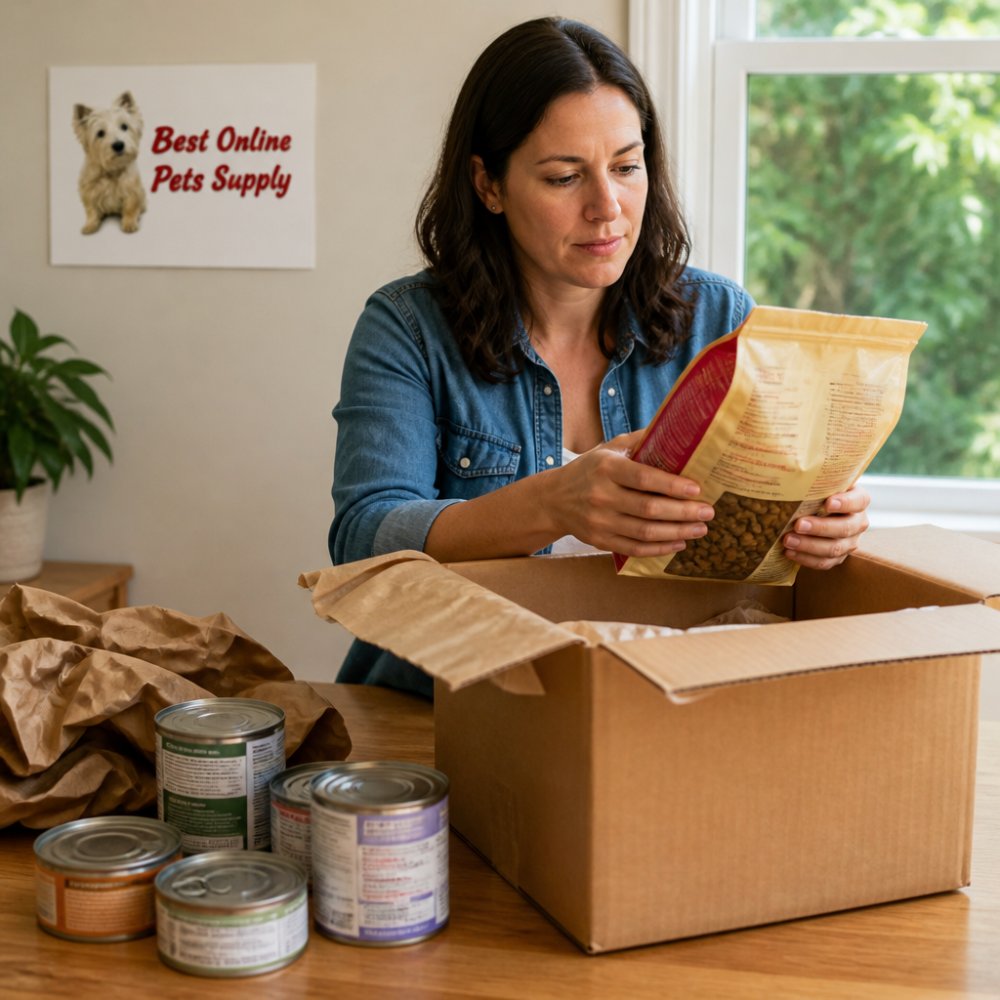
Treat every delivery like a quality-control inspection, not a grocery drop-off. The printed date tells you what the manufacturer intended, not what happened in a hot truck or damaged box.
Step 1: Inspect the Outer Box and Packaging (Before You Open Anything)
- Look at the box. Crushed corners, water stains, or a strong pet-food odor mean a bag or can may have leaked in transit.
- Check for heat exposure. A package that sat on a hot porch or truck may have exceeded safe storage temperatures, accelerating fat oxidation and nutrient breakdown even before the date passes.
- Check for shipping delays. Long warehouse stays or reroutes mean extended time in uncontrolled conditions.
Step 2: Verify the Date Code on the Actual Item
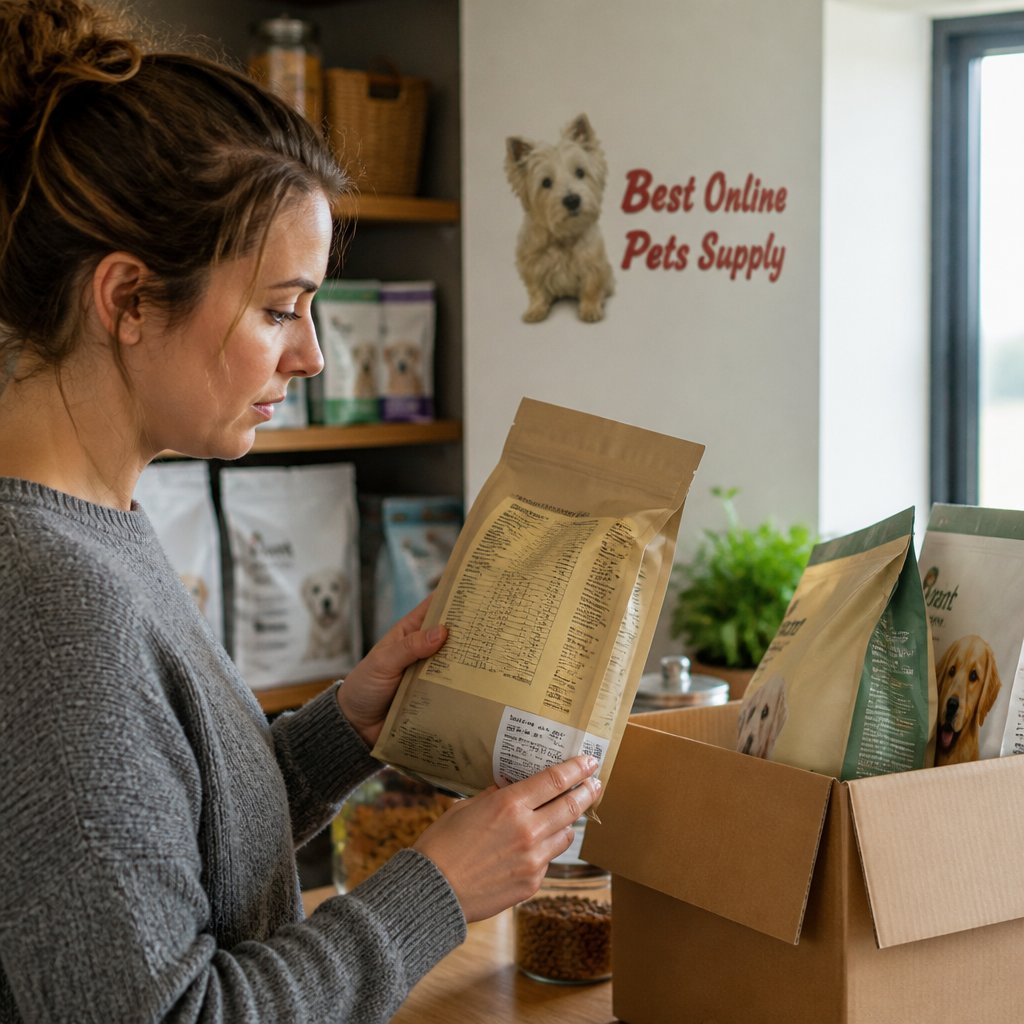
Don't trust the listing photo, read the date code on the physical package in good light.
- Dry food bags: Printed near the bottom seam or back panel; may be a best-by date or Julian code.
- Canned food: Stamped on the bottom or side; check it's legible.
- Fresh or refrigerated food: Confirm the use-by date and that it arrived at the correct temperature.
If the date is smudged, illegible, or missing, photograph it and contact the seller, you cannot verify freshness without it.
Step 3: Examine Seals, Cans, and Product Condition
- Bags: Seal intact, no punctures or air leaks. Squeeze gently, escaping air means a compromised seal.
- Cans: No dents deep enough to catch a fingernail, no rust, no bulging. Discard bulging cans unopened.
- Smell: Should smell like food, not sour, rancid, or fermented.
Step 4: Document and Report Expired or Damaged Orders
If you receive expired or damaged food, act quickly, most sellers and marketplaces have limited claim windows.
- Photograph everything: date code, lot number, damage, shipping label, and the box as it arrived.
- Note the details: order number, purchase date, seller, marketplace, and the problem.
- Contact the seller within 24-48 hours in writing, attach photos, and request a refund or replacement.
- If the seller refuses, escalate to the marketplace, Amazon, Chewy, and Walmart prohibit selling expired items.
- If the marketplace fails, dispute the charge with your credit card company, keeping all documentation.
- Leave an honest review to help other buyers and flag patterns.
Step 5: Store It Correctly, or Return It
If the food is fresh and undamaged, store it properly; if not, return or dispose of it safely.
- Keep the original bag, it has barriers against air and moisture.
- If you transfer kibble, use an airtight container and keep the original bag with the date code inside or taped on.
- Store in a cool, dry place away from sunlight, heat vents, and humidity.
A Quick Reference: The Five-Minute Receiving Checklist
- Outer box intact, no water damage, no strong odor
- Date code legible on every item
- Lot number recorded (photograph it)
Running this checklist on every order catches problems before they reach your pet's bowl and builds a paper trail that makes refunds and replacements easier.
Signs of Spoiled Dog Food and Cat Food
Even with precautions, spoiled food occasionally gets through. Know the signs before your pet eats it.
Dry kibble that's spoiled shows:
- Visible mold or discoloration
- A sour or rancid smell
- Clumping or moisture inside the bag
Canned or wet pet food that's spoiled shows:
- Swelling or bulging of the can
- Rust or corrosion on the can
- Dents deep enough to catch your fingernail
Fresh or refrigerated pet food that's spoiled shows:
- Mold or visible growth
- Separation or unusual texture
- A sour or off smell
If you see any of these signs, discard the food immediately. Don't let your pet taste it. The risk of foodborne illness isn't worth saving a few dollars.
Best Pet Food Storage Containers for Freshness 2026
How you store pet food affects how long it stays fresh. Proper storage guards against heat, humidity, air, and light.
Airtight Containers and Sealed Bags
The original bag is often the best option if undamaged and sealed, pet food bags have barriers against air and moisture. Reseal tightly after each use, or transfer kibble to airtight containers:
- Glass or plastic with snap-lock or rubber-gasket lids
- Stainless steel bins with tight covers
- Pet-specific kibble containers
Minimizing air exposure slows oxidation and extends freshness by weeks or months.
Protecting Against Heat, Humidity, and Light
Store pet food in a cool, dry place:
- Away from direct sunlight, heating vents, ovens, and radiators
- Not in basements or garages where humidity fluctuates
- Off the floor (moisture and pests)
Heat speeds fat oxidation, humidity invites mold, and light degrades vitamins. A pantry or cabinet away from appliances works well; in hot or humid climates, refrigeration or freezing extends shelf life, especially for opened bags or premium foods with fewer preservatives.
Pet Food Shelf Life Guidelines for Dry, Wet, and Fresh Food
Dry kibble (unopened): 12-18 months from the best-by date.
Dry kibble (opened): 2-4 weeks if stored in an airtight container.
Canned or wet food (opened): 3-5 days refrigerated in a covered container.
Fresh or refrigerated pet food: 7-14 days unopened, depending on the brand.
Frozen pet food: 6-12 months in a standard freezer (0°F or below).
When ordering online, factor in consumption rate.
Handling Seller and Marketplace Accountability
When you buy pet food online, you're trusting the seller to ship fresh, undamaged products. If they fail, you have recourse.
Seller responsibility: Reputable sellers inspect inventory, rotate stock so older items ship first, and pack carefully.
Marketplace accountability: Amazon, Chewy, Walmart, and similar platforms prohibit selling expired items and can suspend repeat offenders. File complaints through the platform so they track patterns.
Your rights as a buyer:
- Return expired or damaged food for a full refund
- Request replacement shipments at no charge
- Leave honest reviews noting the issue (helps other buyers)
Expired pet food isn't just wasted money, it's a health risk your pet doesn't deserve. At Best Online Pets Supply, we're committed to shipping fresh, high-quality food that supports your dog or cat's long-term health.
Frequently Asked Questions
What should I do if I receive expired pet food from an online retailer?
Stop using it immediately and contact the retailer with photos of the expiration date and packaging. Most reputable online pet food suppliers, including Best Online Pets Supply, will issue a refund or send a replacement with a current date. Document the order number, delivery date, and the product's expiration date. Keep the packaging as proof. If the seller refuses to resolve it, report the issue to the marketplace where you purchased it. Your pet's health is the priority, so don't use the food even if it's only slightly expired.
How long can dog food be eaten after the expiration date?
Do not feed your dog food after its expiration date. Best-by dates on pet food indicate when the manufacturer guarantees nutritional value and quality. After that date, preservatives break down, nutrients degrade, and the risk of spoilage increases. Even one or two days past the date can introduce foodborne illness risk. Always check the date before opening and discard unopened food that has passed its best-by date.
What are the signs that pet food has gone bad?
Inspect food for visible mold, discoloration, or unusual texture. Smell the food for sour, rancid, or off odors, trust your nose. Changes in flavor or palatability may also indicate spoilage. For wet or canned food, bulging cans or leaking seals are red flags. For dry kibble, clumping, moisture, or an unusual smell suggests exposure to humidity or heat. If your pet shows signs of digestive upset, vomiting, or loss of appetite after eating, stop feeding that batch and consult your veterinarian.
How should I store pet food to keep it fresh after opening?
Transfer dry kibble to an airtight container or seal the original bag tightly with a clip. Store in a cool, dry place away from direct sunlight, heat, and humidity. Avoid storing near the kitchen stove or in damp basements. Opened canned or wet food should be refrigerated in an airtight container and used within 3-4 days. Fresh pet food typically requires refrigeration and has a shorter shelf life, follow the manufacturer's instructions. Proper storage extends freshness and prevents nutrient loss.