 How-to
How to Simplify Pet Care for Busy Parents
Last Updated: November 7, 2026
Quick Summary
To simplify pet care, build a fixed daily routine with set feeding, water, and walk times, then assign each task to one named family member. Post a checklist by the door and prepare a backup caregiver file so care continues on busy or disrupted days.
- Feed pets at the same two or three times daily, even on weekends.
- Assign every pet task to one owner, with a named backup and a time window.
- Use a checklist posted by the door to remove guesswork.
- Keep a caregiver file with vet, feeding, medication, and access details.
- Agree on a minimum-care baseline: food, water, toileting, medication, and one interaction.
Table of Contents
- Why Pet Care Piles Up for Busy Families
- Build a Pet Care Routine for Busy Families
- Split Pet Tasks Across the Family by Age and Ability
- How to Keep a Dog Busy While You Are Out
- Build a Pet Care Checklist for Families
- Plan a Family Pet Care Schedule With Backup Options
- Set Up Your Simplified Pet Care Plan This Week
- Frequently Asked Questions
Why Pet Care Piles Up for Busy Families
Pet care rarely fails in one big moment.
Most families juggle work, school runs, and activities. Pets add daily tasks that never stop.
The problem is that these tasks live in people's heads instead of on a plan. When one parent handles everything, small jobs slip.
- Tasks are scattered across the day with no fixed times
- Supplies run low without anyone noticing
- Pet needs are forgotten during busy weeks
The fix starts with making pet care predictable. Once the routine is fixed, the mental load drops fast.
Build a Pet Care Routine for Busy Families
A simple routine is the single biggest time saver for a family with pets, and it is the easiest way to simplify pet care day to day. Keep it short, keep it consistent, and let it repeat each day.
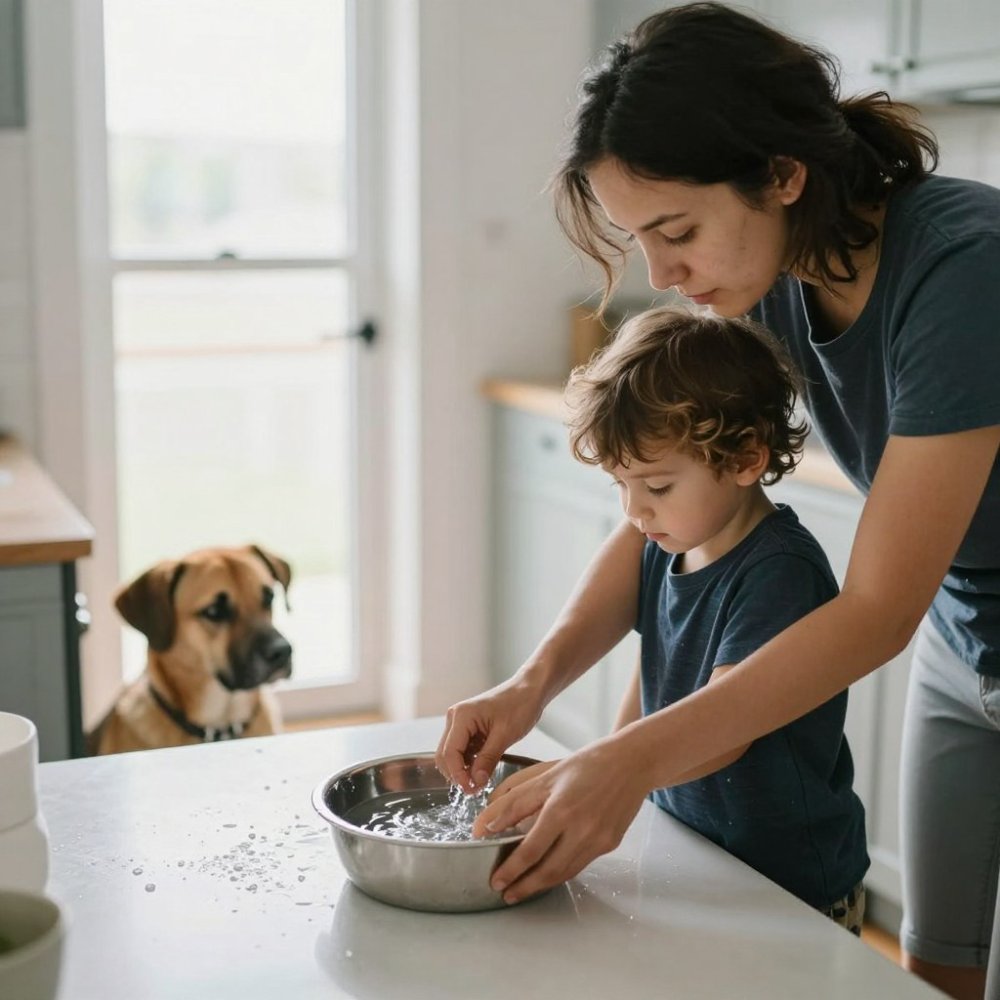
Start by listing every daily pet task. Then attach each one to a moment that already happens, like breakfast, arriving home, or bedtime.
Fixed Feeding and Water Times
Set the same feeding times every day, even on weekends. Pets settle quickly when meals are predictable, and you stop asking yourself whether they ate.
- Feed at the same two or three times daily
- Refill fresh water at each meal
- Keep food and water in one fixed spot
A feeding station with a labeled bin for food keeps things tidy and makes restocking easy. Read how to store bulk pet food safely so the bin stays fresh between purchases. When you're ready to restock, Best Online Pets Supply offers an extensive range of pet care products, and orders over $99.00 qualify for Free Shipping.
Scheduling Walks, Play and Rest
Walks and play need their own slots. Dogs in particular do better with a set exercise window. Cats benefit from short play bursts morning and evening.
Build in rest too. A designated quiet spot lets pets nap without interruption, which many busy homes forget to plan for.
Split Pet Tasks Across the Family by Age and Ability
Most guides say "share the load" and stop there. The missing piece is a concrete assignment system that matches tasks to what each family member can safely and reliably do. Build one chart, post it where everyone sees it, and revisit it monthly.
A Practical Age-and-Ability Task Matrix
Use this as a starting point, then adjust for your child's maturity, the pet's size, and any special needs. The rule of thumb: a child can own a task only if they can complete it safely without an adult watching every step.
- Ages 4-6 (with an adult nearby): refill the water bowl from a small pitcher, put a scoop of kibble in the bowl, hand a leash to an adult, wipe the feeding mat.
- Ages 7-9: scoop and serve pre-measured food, refill water independently, clean a litter box with gloves and a scooper (small pets only), put away toys, check the supply bin and tell an adult when food or litter is low.
- Ages 10-12: take a small, calm dog on a short walk with an adult in sight, brush a short-haired pet, clean cages for small pets, refill puzzle toys, log tasks on the checklist.
- Ages 13+: walk a medium dog independently on a known route, handle evening feeding, clean litter boxes and cages, give pre-approved treats, do a weekly supply count.
Watch out: keep medication, restraint of a frightened or injured animal, and solo walks with a strong dog with an adult or a paid professional.
Assign Owners, Not Just Tasks
A task with no named owner is a task that falls to whoever notices first, usually one parent. Write each task on the chart with a single owner, a backup owner, and a time window. For example: "Morning water refill, Maya (backup: Dad), before school." Rotate the least popular jobs (litter, waste pickup) monthly so resentment doesn't build.
Species-Specific Splits
A dog-only chart leaves cat and small-pet families improvising. Add rows for each species in the home:
- Dogs: walks, training practice, puzzle-toy refills, waste pickup, nail checks.
- Cats: litter scooping (daily), water fountain refills, wet-food meals, play sessions, scratching-post checks.
- Small pets (rabbits, guinea pigs, hamsters): cage cleaning, hay and water refills, fresh vegetable prep, exercise time outside the cage.
When one person is away, the backup owner steps in, not the person who "usually does it." That single rule prevents most missed-task gaps.
How to Keep a Dog Busy While You Are Out
Dogs left alone for long stretches often get bored, and bored dogs chew, bark, or dig.
Interactive toys and puzzle feeders are the easiest tools. Browse healthy snacks for active dogs to choose treats that double as enrichment.
Healthy treats can also add enrichment.
A short walk or play session right before you leave helps too. A tired dog settles more easily than an energetic one.
Build a Pet Care Checklist for Families
A checklist removes guesswork. Pin one near the door where everyone passes it on the way out.
- Fresh water filled
- Morning meal served
- Walk or play completed
- Litter box cleaned
Keep a shorter version for hectic days. Water, food, and one walk cover the essentials, and that is enough to keep pets healthy during a crunch week.
Plan a Family Pet Care Schedule With Backup Options
Routines break. A child gets sick, a parent travels, a snow day cancels school and work. The families who handle these days well aren't more organized, they wrote the backup plan before they needed it. This is the section most pet-care guides skip, and it's the one that keeps pets safe when life gets messy.
Build a Backup Caregiver File
Create one document, paper on the fridge and a photo on each adult's phone, that any backup helper could use without calling you. Include:
- Primary and backup caregiver names and phone numbers (neighbor, grandparent, sitter, dog walker).
- Veterinarian name, address, phone, and after-hours emergency clinic with directions.
- Feeding instructions: exact food, amount, times, and where it's stored.
- Medication list: what, how much, when, and how it's given.
Review the file every few months and after any change in medication, diet, or vet.
Set a Realistic Minimum-Care Baseline
On a genuinely disrupted day, you can't do everything, but you can't skip essentials either. Agree as a family on the non-negotiables:
- Food and fresh water at the usual times (or as close as possible).
- Toileting: at least one walk or litter-box scoop.
- Medication on schedule, this is never optional.
- One short interaction: a brief walk, play session, or quiet cuddle so the pet isn't isolated all day.
Everything else, grooming, training, long walks, puzzle toys, can wait a day. Write this baseline on the same chart as the daily tasks so no one has to debate it in the moment.
Choose Backup Support by Need, Not by Habit
Different disruptions call for different help. Match the option to the gap:
- A neighbor or family member works for a single missed walk or feeding, cheapest, but reliability varies.
- A dog walker fits a predictable midday gap during workweeks; ask about insurance, backup walkers, and how they handle a sick or injured pet.
- A pet sitter suits overnight trips and pets that need medication or company; ask whether they stay overnight or do drop-ins, and get references.
- Doggy daycare fits high-energy dogs that struggle alone for long days; ask about vaccination requirements, trial days, and how they separate dogs by size and temperament.
When comparing options, ask the same questions of each: What happens if the caregiver is sick? Are they insured and trained in pet first aid? How do they reach your vet? What's the cancellation policy? The answers matter more than the hourly rate.
Keep a Restock Buffer
A missed shopping trip shouldn't become a crisis. Keep at least one unopened bag of food, a spare litter supply, and extra waste bags on hand, and rotate stock so nothing expires. Compare ways to order heavy pet supplies online if a restock trip is hard to fit in. If you use home delivery, check Best Online Pets Supply's website for current shipping details before you rely on it during a busy week. Find a dependable pet food delivery service as a fallback when you cannot shop in person.
Watch out: don't let a backup plan live only in one parent's head. If the other adult can't name the vet, the food amount, and the backup sitter without checking, the plan isn't finished.
The backup plan breaks down into a few key elements that a family can set up in advance.
| Backup element | What it covers | Key point |
|---|---|---|
| Caregiver file | Contacts, feeding, medication, access | Usable without calling the owner |
| Minimum-care baseline | Food, water, toileting, medication, one interaction | Non-negotiables on a disrupted day |
| Neighbor or relative | Single missed walk or feeding | Cheapest, reliability varies |
| Dog walker | Predictable midday gap | Ask about insurance and backup walkers |
| Pet sitter | Overnight trips, medication, company | Ask about overnight stays and references |
| Doggy daycare | High-energy dogs alone all day | Check vaccination rules and trial days |
| Restock buffer | Food, litter, medication, waste bags | Monthly five-minute supply check |
Set Up Your Simplified Pet Care Plan This Week
Start small. Pick three steps from this guide and set them up before the weekend.
- Write down every daily pet task
- Set fixed feeding and walk times
- Assign each task to one family member
- Post a checklist by the door
- Choose one backup helper and one restock routine
Once these basics run for a week, add refinements. The goal is a plan that feels easy, not one that adds stress.
Pet care should not take over your evenings. Best Online Pets Supply helps busy families keep dogs and cats healthy with a simple online shopping experience and free shipping on qualifying orders.
Frequently Asked Questions
How can busy parents make time for daily pet care?
Attach each pet task to a fixed moment you already have, such as feeding before school drop-off or a short walk after dinner. Put the tasks on a shared family calendar with phone reminders so nothing depends on memory. Keep the routine short and consistent, because a small task done every day is easier to sustain than a long one done when there is time. If a task keeps slipping, move it to a different anchor point in the day rather than adding guilt. Review the schedule once a month and remove anything nobody actually does.
What pet care tasks should be part of a daily routine?
The daily core is usually fresh water, scheduled meals, at least one walk or outdoor break for dogs, litter box cleaning for cats, and a short play or enrichment session. Add a quick check for appetite, energy and any changes in behavior, since early signs of illness often show up here. Medication and any special diet steps belong on the checklist too. Weekly tasks such as grooming, bedding washes and supply restocking can sit on a separate list so the daily one stays short.
How do you keep a dog busy while you are working?
Use interactive toys and puzzle feeders so meals take longer and require thought. Rotate toys every few days to keep them interesting. Schedule a walk before you leave and a short play session when you return, and consider a midday break from a pet sitter or dog walker if you are away for long stretches. Provide a designated rest area with a comfortable bed and fresh water. Doggy daycare is another option for high-energy dogs that need social time.
How can children safely help with pet care?
Give children tasks suited to their age, such as filling water bowls, scooping litter with supervision, or helping with brushing. Keep anything involving food handling, medication, heavy bags or waste disposal for adults. Teach them to read basic body language so they know when a pet wants space. A simple chart that shows who does what each day helps younger children learn responsibility without taking on more than they can handle.