 How-to
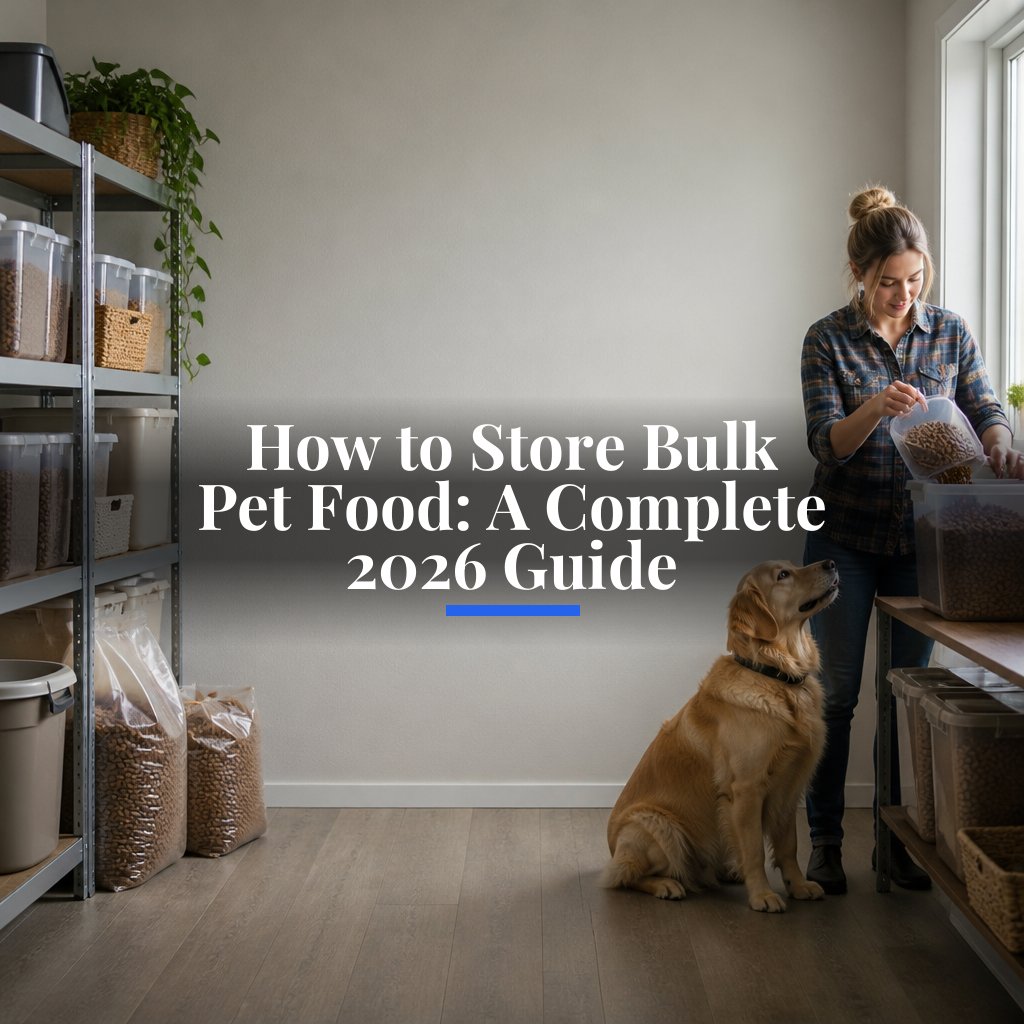
How to Store Bulk Pet Food: A Complete 2026 Guide
Table of Contents
- Why Proper Storage of Bulk Pet Food Matters
- Storing Pet Food in Original Bag: Best Practices
- Best Pet Food Storage Containers for Freshness 2026
- How to Store a 40 lb Bag of Dog Food
- How Long Does Dry Dog Food Last After Opening
- Creating the Right Storage Environment
- Storage by Food Type: Kibble, Raw, and Prescription Diets
- Recognizing Spoilage and Maintaining Freshness
- Frequently Asked Questions
Last Updated: October 13, 2026
Why Proper Storage of Bulk Pet Food Matters
When you store bulk pet food properly, you save money, but improper storage wastes that investment fast: stale food loses nutritional value and contaminated food makes pets sick.
Once a bag of dry kibble is opened, air breaks down nutrients, moisture creeps in, and pests find their way in.
Proper storage preserves nutritional quality, prevents contamination, and extends shelf life so bulk purchases pay off.
Storing Pet Food in Original Bag: Best Practices
The original packaging is your first line of defense, not your only one. Most bags have a fold-top or resealable strip, better than nothing, but not airtight.
Here's what actually works:
- Fold the bag tightly after each feeding. Remove as much air as possible before sealing.
- Use a clip or clothespin to hold the fold in place. This prevents the bag from reopening.
- Store the sealed bag upright in a cool, dry location. This position minimizes air exposure at the opening.
Many owners skip this step because the original bag seems sufficient. It isn't, the material is designed for shipping, not long-term freshness, and degrades once opened.
Best Pet Food Storage Containers for Freshness 2026
The right container keeps food fresh for months instead of weeks. Your choice depends on how much you buy and where you store it.
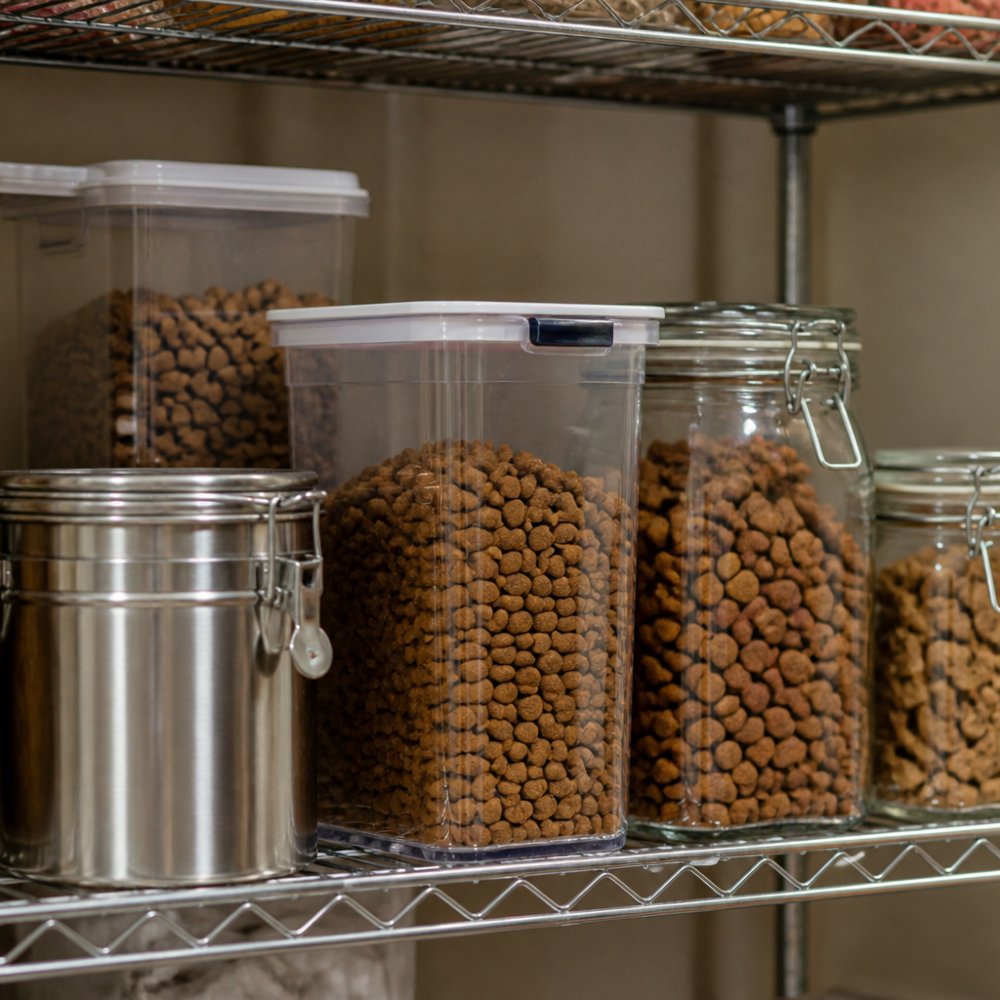
Choosing Food-Safe Container Materials
Plastic containers are affordable and lightweight; look for food-safe, BPA-free plastics.
Metal containers offer superior protection against pests and moisture.
Glass containers don't absorb odors and suit smaller quantities, but they're fragile and space-hungry. Best for kitchen storage you see daily.
For bulk purchases, metal containers win: they seal tightly, resist pests, and last indefinitely.
Sealing and Organizing Your Storage
A tight-fitting lid is non-negotiable. Test the seal by turning the container upside down over a sink, if water drips, try another.
Label every container with:
- The food type and brand
- The date you opened the original bag
- The expiration or use-by date
This takes 30 seconds and prevents feeding expired food when you have multiple bags stored.
Clean containers between bags, residual particles can go rancid and contaminate fresh food. Wash with warm soapy water, dry completely, and inspect for cracks before refilling.
How to Store a 40 lb Bag of Dog Food
A 40 lb bag is the most common bulk size, and where most storage advice breaks down. Every time you open the container, you expose the entire supply to oxygen and humidity. A 40 lb bag can take a single dog 4-8 weeks to finish, so the bottom food sits through repeated air cycles for over a month.
The Two-Container Method
Split the bulk bag into a small daily-use container and a larger reserve container to limit how often the full supply is opened.
- Working container (5-10 lb capacity): Holds about 1-2 weeks of food. Kept in the kitchen or feeding area. Opened at every meal.
- Reserve container (30-40 lb capacity): Holds the rest. Kept sealed in a cool, dark spot. Opened only when the working container is refilled, roughly every 1-2 weeks.
This cuts oxygen exposure on the reserve portion by 90% or more versus opening one large bin at every feeding, and reduces moisture and pest risk.
Step-by-Step for a 40 lb Bag
Step 2: Keep the original bag as a liner (5 minutes) Don't pour kibble directly into a plastic bin.
Step 4: Store the reserve container correctly (ongoing) Keep it in a cool, dry spot between 60-80°F with humidity under 50%.
Step 5: Rotate and refill (every 1-2 weeks) Refill from the reserve when the working container runs low.
Why This Matters for Bulk Buyers
A 40 lb bag bought on sale is only a good deal if the last bowl is as nutritious as the first. Repeated opening of one large container is the top reason bulk buyers throw away the bottom third of a bag. Splitting into two containers is a five-minute setup that protects the whole supply.
How Long Does Dry Dog Food Last After Opening
Most dry pet food stays fresh 2-4 weeks after opening, depending on storage conditions.
Once opened, food deteriorates faster than the manufacturer's timeline suggests. Air exposure accelerates this process.
Here's a practical timeline:
| Storage Condition | Expected Freshness |
|---|---|
| Original bag, loosely sealed | 1-2 weeks |
| Original bag, tightly sealed with clip | 2-3 weeks |
| Airtight container, room temperature | 3-4 weeks |
| Airtight container, cool dry place | 4-6 weeks |
When in doubt, trust your nose. Rancid food has a distinct sour or musty smell. If the kibble smells off, throw it out.
Creating the Right Storage Environment
Temperature and humidity are your biggest enemies. Most pet food is designed for room temperature and low humidity; deviations create problems.
Temperature and Humidity Control
Aim for 60-80°F. Above 80°F accelerates fat oxidation and rancidity; below 50°F can cause moisture to condense inside containers.
Humidity should stay below 50%, high humidity grows mold and breaks down nutrients.
Keep food away from:
- Direct sunlight (UV light degrades nutrients)
- Heat sources like radiators or ovens
- Cold areas like uninsulated garages in winter
A climate-controlled pantry or closet is ideal; a cool corner of your bedroom works too. Consistency matters most, stable conditions preserve food longer than perfect conditions that fluctuate.
Protecting Against Pests and Contamination
Airtight containers defend against insects, rodents, and other pests, even a tiny opening gives them access. Check seals regularly.
Keep the storage area clean: wipe spills immediately and vacuum monthly, since crumbs attract pests.
Wash your hands before handling food. Store food away from cleaning chemicals, medications, and other non-food items.
In pest-prone areas, place the sealed container inside a larger bin with a tight lid for a double barrier pests can't breach.
Storage by Food Type: Kibble, Raw, and Prescription Diets
Most storage guides treat all pet food the same. In practice, shelf life after opening, container requirements, and spoilage signs differ sharply by food type. Here are the categories bulk buyers encounter most.
Dry Kibble
Shelf life after opening: 4-6 weeks in an airtight container at 60-80°F and under 50% humidity.
Bulk-specific guidance: Kibble is the most forgiving food type, making it the easiest to over-buy.
Container: Airtight, food-safe, opaque, with the original bag inside as a liner.
Spoilage signs: Rancid or musty smell, dull or greasy appearance, clumping, visible mold, or a change in your pet's willingness to eat.
Freeze-Dried Raw
Shelf life after opening: 2-3 weeks if kept strictly airtight.
Container: Small, airtight, opaque jars or Mylar bags with oxygen absorbers. Avoid large bins opened daily, every opening lets in humid air.
Spoilage signs: Soft or chewy texture where it should be brittle, clumping, off smell, or visible moisture inside the container.
Frozen Raw
Shelf life after opening: Follow the manufacturer's thawing guidance. Keep frozen raw frozen until use, then refrigerate 1-3 days after thawing.
Bulk-specific guidance: Bulk frozen raw is a freezer-space problem more than a storage problem.
Container: Original manufacturer packaging, or freezer-safe food-grade containers. Label with the thaw date, not just the purchase date.
Prescription Diets
Shelf life after opening: Varies by formula.
Bulk-specific guidance: Prescription diets are usually bought in smaller quantities because they're expensive and your vet may adjust the formula.
Container: Airtight, ideally with the original bag inside so the prescription label and lot number stay with the food, you'll need that lot number if a recall is issued.
Wet and Canned Food
Shelf life after opening: 3-5 days refrigerated in an airtight container. Unopened cans are shelf-stable for years, but discard bulging, dented, or rusted cans.
Bulk-specific guidance: Canned food is heavy and space-hungry.
Container: Once opened, transfer leftovers to a glass or food-safe plastic container with a tight lid.
Spoilage signs: Off odor, discoloration, mold, or a bulging can (possible bacterial growth, discard without opening).
A Quick Decision Rule for Bulk Buyers
Match your bulk purchase to the food type's post-opening window, not the sale price:
- Kibble: Buy up to 6 weeks of food per pet.
- Freeze-dried raw: Buy up to 3 weeks of food per pet.
- Frozen raw: Buy only what fits in your freezer with airflow.
This rule prevents the most common bulk-buying mistake: saving at checkout and losing it to spoilage at the bottom of the bag.
FDA guidance on pet food storage and handling
Recognizing Spoilage and Maintaining Freshness
Spoiled pet food shows clear warning signs. Learn to spot them before your pet eats something harmful.
Visual signs:
- Discoloration or dark spots
- Visible mold (white, green, or black)
- Clumping or hardening of kibble
Smell:
- Sour or vinegar-like odor
- Musty or moldy smell
- Rancid or off odor
Taste test (spit it out immediately):
- Bitter or sour taste
- Unusual texture or crunchiness
If you notice any of these signs, discard the food. Don't risk your pet's health.
To maintain freshness:
- Keep the container sealed between feedings
- Store at consistent temperature and humidity
- Use older food first (rotate stock)
When you store bulk pet food from Best Online Pets Supply, with free shipping on orders over $99, proper storage ensures that investment pays off in pet health and nutrition, not waste.
Frequently Asked Questions
How should I store a 40 lb bag of dog food to keep it fresh?
Transfer the food to an airtight container with a tight-fitting lid, or seal the original bag tightly with a clip and place it inside a storage bin. Keep it in a cool, dry place at room temperature (below 80°F) away from direct heat and moisture. If the bag won't fit in a container, divide the food into smaller sealed portions. Always store in a location protected from pests and humidity.
How long does dry dog food last after opening?
Opened dry dog food typically stays fresh for 2-4 weeks when stored properly in an airtight container. Check the use-by date on the bag, as shelf life varies by brand and formula. Factors like humidity, temperature, and air exposure affect freshness. Store opened food away from heat and moisture, and discard any kibble that shows signs of mold, rancid odor, or discoloration.
What type of container is best for storing bulk pet food?
Food-safe airtight containers made from plastic, metal, or glass work well for bulk pet food storage. Plastic containers are lightweight and affordable; metal containers offer durability and pest protection; glass provides visibility without odor retention. Choose a container with a tight-fitting lid to prevent air exposure and moisture. Ensure the container is clean and dry before filling, and label it with the food type and opening date.
Can I store pet food in its original bag?
Yes, you can store pet food in its original bag if sealed properly. Use a bag clip or fold the top tightly to minimize air exposure. However, placing the sealed original bag inside a storage bin offers extra protection from moisture, pests, and heat. This double-layer approach is especially useful for bulk purchases. Always keep the original bag's use-by date visible for easy reference.
Bulk pet food is only a good deal if it stays fresh. Improper storage turns savings into expense. The right containers, sealed properly and stored in the right conditions, keep your pet's food nutritious for weeks. Best Online Pets Supply delivers premium pet nutrition to your door. Store it correctly, and your dog or cat gets the full benefit of that quality. Shop Now to stock up on the nutrition your pet deserves.