 Ultimate guide
Signs of Expired Pet Food: A Safety Guide
Table of Contents
- Understanding Best By vs. Expiration Dates on Pet Food
- Signs of Spoilage in Dry Kibble
- Signs of Spoilage in Wet Canned Food
- Identifying Mold and Insect Infestation
- How to Store Dry Dog Food for Freshness
- Dangers of Rancid Pet Food
- What to Do If Your Pet Eats Expired Food
- Safe Disposal of Expired Pet Food
- Frequently Asked Questions
Last Updated: October 3, 2026
Understanding Best By vs. Expiration Dates on Pet Food
Understanding the distinction between "best by" and "expiration" dates on pet food packaging is essential for recognizing signs of expired pet food and protecting your pet's health.
Pet food doesn't suddenly become dangerous after its best by date, but nutrient degradation accelerates over time. Vitamins, minerals, and essential fatty acids break down through oxidation and moisture exposure.
Checking both dates ensures your pet receives maximum nutritional benefit. Fresh food supports better digestion, coat health, and overall vitality.
Signs of Spoilage in Dry Kibble
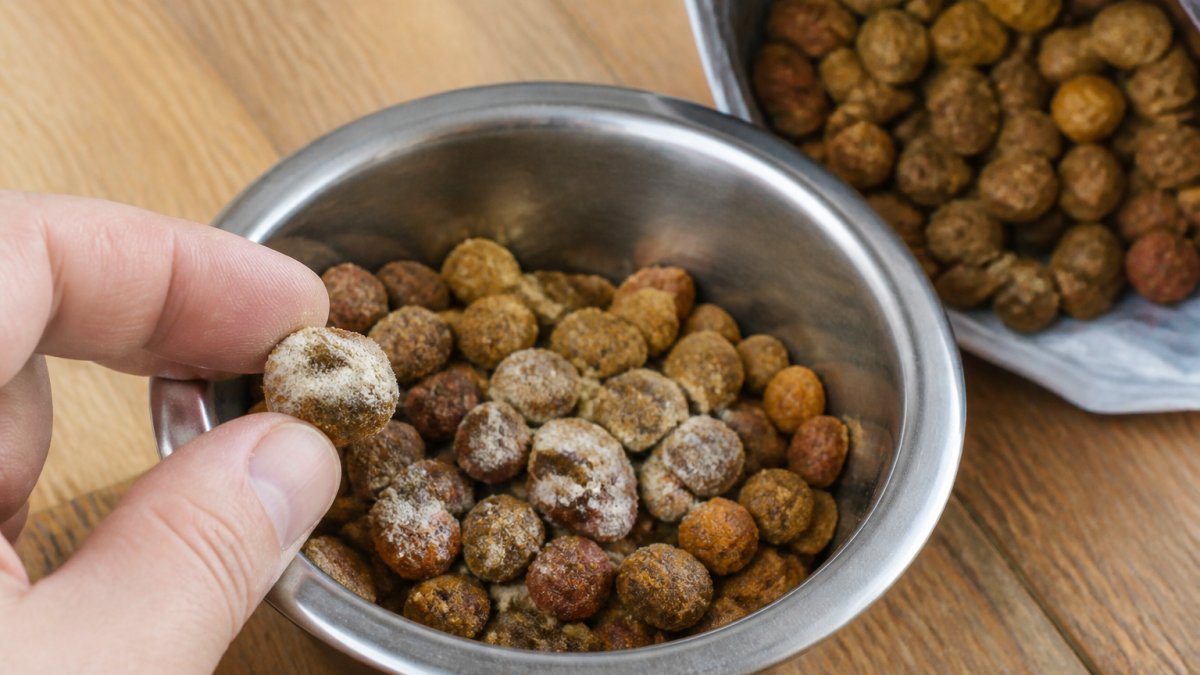
Dry kibble shows several warning signs before becoming unsafe. Discoloration, pieces appearing darker, lighter, or spotted, suggests oxidation or contamination. Rancidity, a lipid oxidation process, causes fats to break down and produce off-odors.
A musty or sour smell is among the most reliable signs of expired pet food and your most important warning sign. Fresh kibble smells neutral or grain-like; any sour, musty, or chemical odor indicates moisture infiltration or bacterial growth.
Visual and Sensory Testing Guide
Here's how to conduct a practical sensory evaluation of your pet's kibble:
-
Visual inspection, Pour kibble into a white bowl under bright light. Look for discoloration, visible mold spots (which appear as dark specks or fuzzy growth), or oily residue on the pieces.
-
Smell test, Bring the bowl close and take a deliberate sniff. Fresh kibble should smell neutral or slightly grain-like. Any sour, rancid, or musty odor indicates spoilage.
-
Texture check, Feel a few pieces between your fingers. Kibble should be hard and crisp. Soft, crumbly, or sticky kibble suggests moisture damage and possible mold development.
-
Break test, Snap a piece in half. The interior should match the exterior color. A darker interior or visible moisture indicates the kibble has absorbed humidity and begun to degrade.
-
Container inspection, Examine where the kibble was stored. Look for condensation, water damage, or pest droppings near the storage area.
Signs of Spoilage in Wet Canned Food
Canned pet food shows different spoilage indicators. Swelling or bulging indicates bacterial gas production and means the food is unsafe regardless of the date.
Rust, corrosion around seams, dents, or punctures compromise the seal and allow bacterial contamination. Listen for a hiss when opening; no sound suggests seal failure.
Contents should have consistent texture and color. Separation, discoloration, or sour/off smells indicate spoilage and the food should be discarded.
Identifying Mold and Insect Infestation
Mold thrives in warm, humid environments and produces mycotoxins that cause gastrointestinal distress, vomiting, or serious health issues. Visible mold appears as fuzzy growth, dark spots, or discoloration.
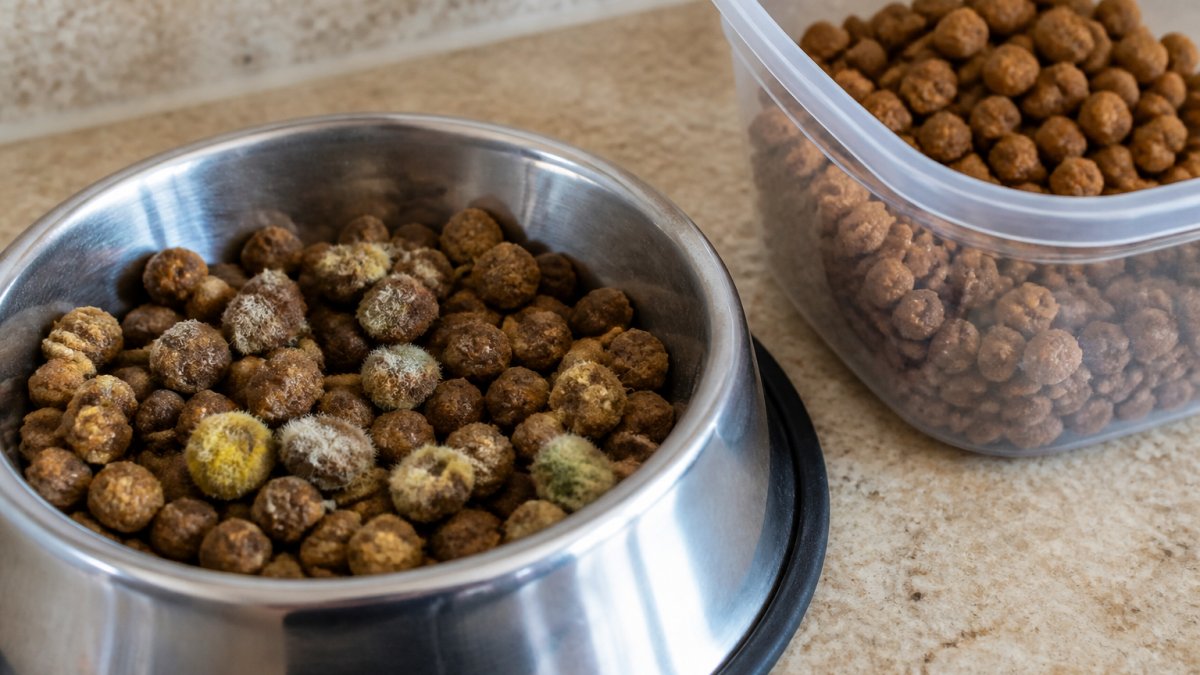
Weevils, moths, and beetles commonly infest dry pet food. Signs include small holes in kibble, webbing, or visible insects. These pests introduce bacteria and create unsanitary conditions.
Storage containers play a crucial role in preventing both mold and infestation.
How to Store Dry Dog Food for Freshness
Temperature and humidity are critical. Store kibble in a cool, dry place between 50-70°F; humidity above 60% accelerates mold growth and nutrient breakdown.
Keep the original bag in an airtight container. Oxygen exposure triggers lipid oxidation and rancidity. Avoid garages and basements where temperature and humidity fluctuate.
Best Pet Food Storage Containers for Freshness 2026
Choose containers with airtight seals and rubber gaskets or locking mechanisms. Glass offers superior protection, blocking oxygen and moisture while resisting odor absorption.
Choose a container that holds 2-3 weeks of food, minimizing air space and oxidation. Graduated measurements help track inventory.
Avoid storing pet food in the original paper bag, which is porous and allows moisture and oxygen to pass through. Paper bags are designed for short-term storage only.
Dangers of Rancid Pet Food
Rancid pet food poses real health risks that extend beyond simple palatability issues.
The nutrient loss in rancid food is equally problematic. Essential fatty acids, which support skin and coat health, degrade rapidly. Vitamins, particularly fat-soluble ones like A, D, E, and K, become less bioavailable.
Bacterial contamination often accompanies rancidity. As food degrades, its natural preservatives become less effective, and conditions become more favorable for bacterial growth.
What to Do If Your Pet Eats Expired Food
If your pet consumed expired pet food, your immediate response depends on how far past the expiration date the food was and what type of spoilage occurred. Food that's only slightly past the best by date typically causes no problems, the main concern is reduced nutrition, not immediate illness. However, food showing visible mold, rancidity, or other signs of spoilage warrants closer monitoring.
Symptoms to Watch For
Most pets experience mild gastrointestinal distress if they eat spoiled food. Watch for vomiting within 2-6 hours of consumption. Diarrhea may develop and persist for a few days as the digestive system clears the contaminated food.
More serious signs include severe abdominal pain, bloody vomit or stool, excessive drooling, or signs of dehydration like dry gums or decreased skin elasticity. These symptoms suggest more significant bacterial contamination or toxin exposure.
When to Contact Your Veterinarian
Contact your vet if your pet shows any of the serious symptoms listed above, or if mild symptoms persist beyond 24 hours. Bring the expired food or its packaging to your appointment, this helps your vet identify what your pet consumed and assess the actual risk.
For puppies, senior pets, or animals with existing gastrointestinal issues, err on the side of caution and call your vet even for mild symptoms. These populations are more vulnerable to complications from foodborne illness.
Safe Disposal of Expired Pet Food
Expired or spoiled pet food requires careful disposal to prevent environmental contamination, pest attraction, and potential harm to wildlife or stray animals. The method you choose depends on the quantity, type of food, and your local waste management options.
Dry Kibble Disposal Methods
Small quantities (under 5 pounds): Seal the kibble in a plastic bag and place it in your regular household trash.
Large quantities (5-50 pounds): Contact your local waste management authority before disposal.
Very large quantities (50+ pounds): This might occur if you discover an entire bag is spoiled or if you're switching brands and need to clear old stock.
Canned Food Disposal
Empty the contents first: Never place canned food with residue into recycling. The food inside will spoil, create odors, and contaminate the recycling facility.
Rinse the can lightly: A quick rinse removes most food residue without wasting water.
Check local recycling rules: Some municipalities require cans to be rinsed and dried; others have specific guidelines about food residue. Call your local recycling program or check their website for requirements.
Environmental and Safety Considerations
Wildlife and stray animal risk: Pet food left in accessible outdoor trash or dumped in natural areas attracts wildlife and stray animals.
Groundwater contamination: Pet food buried in yards or left in landfills can leach nutrients and bacteria into groundwater. This is particularly concerning in areas with shallow water tables or near wells.
Pest proliferation: Improperly disposed pet food attracts rodents, insects, and other pests to your property and neighborhood.
Special Disposal Scenarios
Mold-contaminated food: Food with visible mold should never be composted, even in municipal compost programs. Mold spores and mycotoxins can survive the composting process and contaminate finished compost.
Food with insect infestation: Seal infested kibble in a plastic bag and place it in your freezer for 48 hours to kill insects and their larvae before disposal.
Bulk disposal from a pet business or shelter: If you operate a pet care facility and need to dispose of large quantities of expired food, contact a commercial waste management company that handles food waste.
Prevention Through Smart Purchasing
The best disposal strategy is prevention. Buy pet food in quantities your pet will consume before the best-by date, typically within 4-6 weeks of opening. Smaller, more frequent purchases mean less waste and fresher nutrition for your pet. If you buy in bulk to save money, ensure you have adequate airtight storage and a cool, dry location to maintain food quality throughout the storage period.
Frequently Asked Questions
What happens if my dog eats expired pet food?
Expired pet food can cause gastrointestinal distress, vomiting, diarrhea, lethargy, and abdominal pain. The severity depends on how far past the expiration date the food is and what type of contamination occurred. Bacterial contamination like salmonella poses the greatest risk. If your dog shows symptoms after eating expired food, contact your veterinarian immediately. Some dogs may show signs within hours, while others take longer to display illness.
How long after eating bad food will a dog get sick?
Symptoms of foodborne illness in dogs typically appear within 24 to 72 hours of eating contaminated food, though some cases develop within just a few hours. Bacterial infections like salmonella may take longer to manifest. Watch for vomiting, diarrhea, lethargy, loss of appetite, abdominal pain, and dehydration. If symptoms don't resolve within 24 hours or worsen, seek veterinary care immediately.
Is it safe to feed my pet food past the best by date?
The best by date indicates when the food is at peak quality and palatability, not necessarily when it becomes unsafe. Food past this date may have experienced nutrient degradation and taste changes, but isn't automatically dangerous. However, once food shows signs of spoilage, mold, rancidity, insect infestation, or off odors, it poses a genuine health risk and should be discarded. When in doubt, prioritize your pet's safety and replace the food.
How can I tell if dry kibble has gone rancid?
Rancid pet food develops a sour, musty, or unpleasant smell due to lipid oxidation and mold spores. The kibble may appear discolored, have a greasy coating, or show visible mold spots. You can perform a sensory test by breaking open a piece of kibble, fresh food should have a clean grain smell, while rancid food smells stale or off. Store kibble in airtight containers in cool, dry conditions to prevent rancidity and maintain food safety.