 blog
Healthy Snacks for Active Dogs: A Guide
Table of Contents
- Why Active Dogs Need the Right Snacks
- Safe Human Foods for Dogs: What You Can Offer
- Protein Snacks for Dogs: Energy and Recovery
- Fruits and Vegetables Dogs Can Eat: Nutrition Breakdown
- The 90/10 Rule for Dog Treats: Portion Control Guide
- Portable Snacks for Active Outings
- Foods to Avoid and Safety Considerations
- Frequently Asked Questions
Last Updated: October 6, 2026
Why Active Dogs Need the Right Snacks
The right snack supports muscle recovery, maintains steady blood sugar, and keeps your dog full without empty calories, overweight dogs face joint problems, especially after intense activity.
The snacks you choose can mean the difference between quick recovery and fatigue or weight gain.
Choose snacks that serve a purpose: building lean muscle, supporting digestion, or providing quick energy before activity.
Safe Human Foods for Dogs: What You Can Offer
This section covers dog-safe fruits and vegetables plus activity-timed serving guidance.
How to Think About Human Foods for an Active Dog
Whole foods beat processed treats for active dogs: no artificial additives or excess sodium, more water and fiber per calorie, and you control portions. The trade-off is the safety work, washing, cutting, pitting, cooking, where most owners slip up.
A simple rule: if you wouldn't eat it plain, don't feed it to your dog plain. Seasoning, sauces, and oils are the most common cause of digestive upset from otherwise safe foods.
Fruits Dogs Can Safely Eat
Fruits offer natural sugars, fiber, and vitamins. For active dogs, the most useful are hydrating, quick-energy options like watermelon and banana, which replace fluid and glycogen without weighing the dog down.
Safe fruits and how to serve them:
- Apples, Remove seeds and core completely; seeds contain compounds that are unsafe in large amounts. Cut into wedges for large dogs, pencil-eraser-sized cubes for small dogs. About 1-2 slices per 25 lbs of body weight is a reasonable single serving.
- Bananas, Soft, easy to digest, good source of potassium. High in natural sugar, so keep servings small: 1-2 slices for a small dog, up to half a banana for a large dog. A good pre-activity option 30-60 minutes before a walk or training session.
- Blueberries, Packed with antioxidants, and their tiny size makes them ideal training rewards because you can hand out several without blowing the treat budget. A small handful (10-15 berries) is plenty for a medium dog.
Remove seeds and pits before offering fruit, they're choking hazards or contain toxic compounds. Wash produce and introduce one new fruit at a time to spot reactions.
Vegetables Dogs Can Safely Eat
Vegetables are the workhorse of an active dog's snack rotation: high volume, low calories, useful fiber. They're also the easiest category to over-feed, since most owners don't weigh or count them.
Best vegetable options and serving notes:
- Carrots, Crunchy texture helps clean teeth, and the chewing satisfies dogs that want to gnaw. About 4 calories per baby carrot. Cut lengthwise for small dogs to reduce choking risk.
- Green beans, Roughly 3 calories per bean. Plain cooked or raw, no salt. A cup of green beans is a filling, low-calorie snack for a dog on a weight-management plan.
- Cucumbers, Almost no calories and high water content. Slice into coins or sticks; a good hydrating snack on hot days.
Cook harder vegetables like carrots and sweet potatoes for dogs that struggle to chew. Raw works for strong jaws, but cut everything smaller than your dog's throat, especially for small breeds and fast eaters.
Matching the Food to the Activity
Match the food to what your dog is about to do:
- Before vigorous activity (30-60 minutes out): Small, easily digestible carbs, a few banana slices or a tablespoon of plain cooked sweet potato. Keep it small so it doesn't sit heavy in the stomach.
- During long outings: Hydrating, low-mess options, watermelon cubes, cucumber slices, or a few blueberries. These replace a little fluid and give a quick energy bump without a full stomach.
- After hard exercise: Protein plus fluid, a few pieces of plain cooked chicken, a spoonful of bone broth, or a small portion of fish. This supports muscle repair and rehydration.
Protein Snacks for Dogs: Energy and Recovery
Protein builds and repairs muscle tissue, and active dogs need enough to recover and maintain lean muscle.
Top protein options:
- Cooked chicken (lean, affordable, dogs love it)
- Beef (iron-rich, satisfying)
- Turkey (lean protein, easy to digest)
Cook meat plain without garlic, onions, salt, or seasoning, boiling or baking works best, and let it cool before offering.
Bone broth is an excellent recovery tool: its collagen and gelatin support joint health, and its hydration helps after intense activity. Offer it warm or cold post-exercise.
Fruits and Vegetables Dogs Can Eat: Nutrition Breakdown
Different produce offers different benefits, so understanding each helps you choose snacks for your dog's specific needs.
Low-Calorie Options for Weight Management
Active dogs still gain weight if portions exceed calorie needs. Low-calorie snacks let you offer more volume for fewer calories.
Best low-calorie choices:
- Green beans: 3 calories per bean, satisfying crunch
- Cucumbers: nearly zero calories, hydrating
- Watermelon: 11 calories per cup, mostly water
These fill your dog's stomach without excess calories, ideal for dogs prone to weight gain or maintaining lean muscle during training.
High-Fiber Choices for Digestive Health
Fiber supports digestion and keeps your dog full longer. Active dogs with sensitive stomachs often benefit from fiber-rich snacks.
Best high-fiber options:
- Pumpkin (3 grams fiber per cup, supports both constipation and diarrhea)
- Sweet potatoes (3 grams fiber per medium potato)
- Peas (4 grams fiber per cup)
Introduce fiber gradually, too much too quickly causes digestive upset. Start small and increase over one to two weeks.
The 90/10 Rule for Dog Treats: Portion Control Guide
The 90/10 rule: 90% of daily calories from complete dog food, 10% from treats and snacks. For an active dog eating 1,500 calories daily, that's about 150 calories for snacks.
How to track portions:
| Dog Size | Daily Calories | Treat Allowance | Example Snack |
|---|---|---|---|
| Small (under 25 lbs) | 800-1,000 | 80-100 calories | 2-3 apple slices or 1 cup green beans |
| Medium (25-50 lbs) | 1,200-1,500 | 120-150 calories | 1 medium carrot and handful of blueberries |
| Large (50-100 lbs) | 1,600-2,000 | 160-200 calories | 2 medium carrots and 1 cup watermelon |
| Extra Large (over 100 lbs) | 2,200+ | 220+ calories | 3 carrots and 1.5 cups watermelon |
These are estimates; individual dogs vary by metabolism, activity level, and age. Monitor weight monthly and reduce snack portions if it creeps up, too many treats displace essential nutrients from complete food.
Portable Snacks for Active Outings
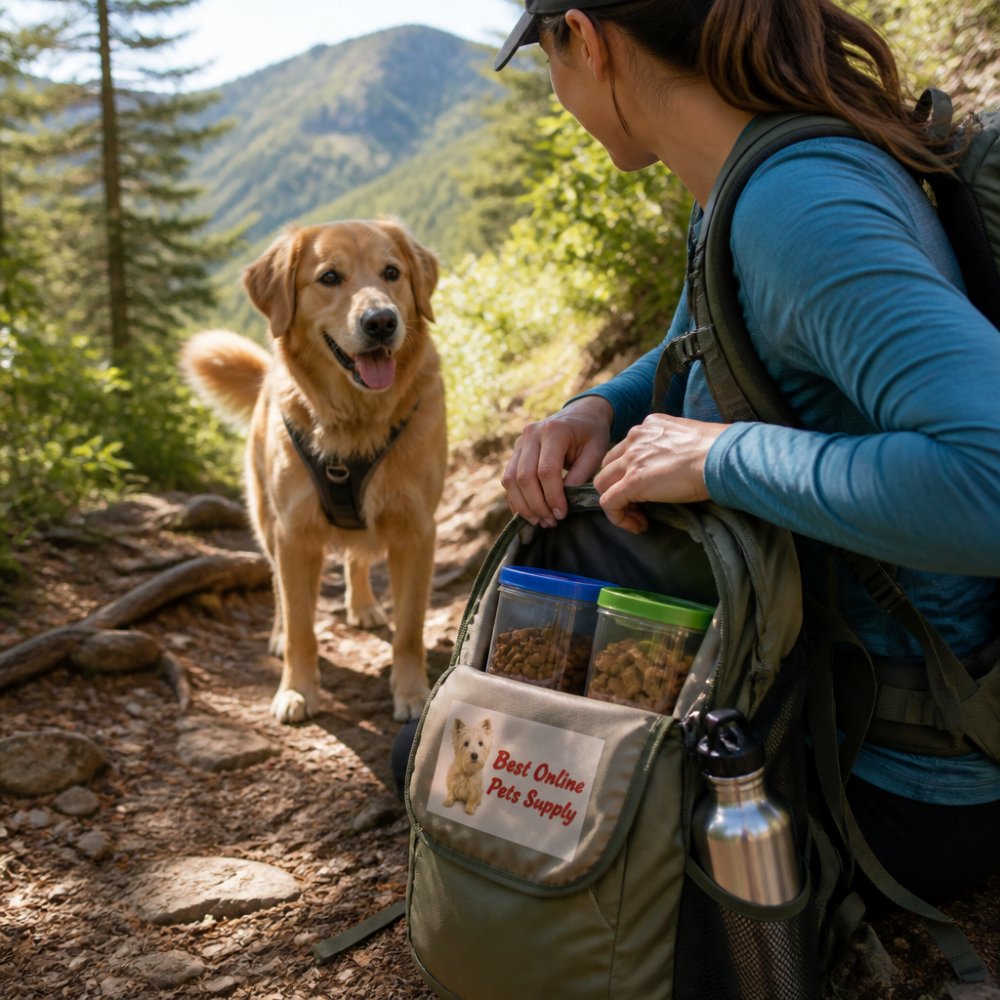
When your dog hikes, runs, or trains for extended periods, portable snacks matter as much as the food itself. This section covers the logistics: what travels well, how much to pack, and how to keep it safe in heat.
What Makes a Snack "Portable"
A snack is portable if it doesn't spoil quickly at ambient temperature, doesn't crumble or leak, is light enough to carry for hours, and can be handed over one-handed while you hold a leash, fumbling with a container on a narrow trail is how treats get dropped and dogs get loose.
Best Portable Snack Options
- Dehydrated meat treats, Lightweight, shelf-stable, high protein. The workhorse of trail snacks. Look for single-ingredient options with no added salt or preservatives.
- Freeze-dried chicken or beef, Maintains nutrition, weighs almost nothing, and rehydrates in the dog's stomach. Good for post-exercise recovery on the trail.
- Dried fruit (apples, bananas, no added sugar), Concentrated energy, but also concentrated sugar. Keep portions small; a few pieces per break is enough.
Pack snacks in airtight containers or resealable bags to prevent spoilage and keep your pack clean. Bring fresh water on every outing, many dogs won't drink enough from a shared bowl when excited.
How Much to Pack
Pack roughly one snack break per 60-90 minutes of activity, plus one extra as a buffer. For a medium dog on a two-hour hike, that's two to three small portions and at least one full water break. Use the 90/10 rule as your ceiling: if your dog eats 1,200 calories a day, that's about 120 from treats, spend most of that budget on the trail.
Hydration on the Move
- Bring more water than you think you need. A common guideline is about 0.5 to 1 ounce of water per pound of body weight per day for a normal-activity dog; a dog working hard in heat can need noticeably more.
- Offer water every 15-20 minutes on hot days, not just at snack breaks. Small, frequent drinks are better than one large drink.
- Use a collapsible bowl or a squeeze water bottle designed for dogs. Sharing your own water bottle is fine in a pinch, but a dedicated dog bottle is easier to aim and less likely to be refused.
Heat, Spoilage, and Timing
- Above roughly 85°F (29°C), favor dehydrated or freeze-dried snacks over fresh meat or cut fruit, which spoil faster in a warm pack.
- If you pack fresh fruit or cooked meat, use a small insulated pouch with a cold pack and plan to use it within a few hours.
- Don't feed a large snack right before hard activity. A full stomach plus running is a recipe for vomiting or bloat. Keep pre-activity snacks small and easily digestible.
Foods to Avoid and Safety Considerations
Certain foods are toxic to dogs. Others cause digestive upset. Know what to avoid completely.
Never feed these foods:
- Chocolate (contains theobromine, toxic even in small amounts)
- Grapes and raisins (kidney damage, even one grape is risky)
- Avocado (persin compound is toxic)
Safe preparation tips:
- Remove apple seeds, peach pits, and cherry pits completely
- Cut hard vegetables into bite-sized pieces to prevent choking
- Cook meat until fully done, no pink inside
Some dogs have food sensitivities. If yours shows allergy signs (itching, ear infections, digestive upset), introduce new snacks one at a time and wait a week before adding another.
Choosing healthy snacks for active dogs doesn't have to be complicated. Focus on whole foods, watch portions with the 90/10 rule, and avoid the toxic list.
Best Online Pets Supply carries many healthy snack options and complete dog foods designed to support active lifestyles. We make it easy to find exactly what your dog needs. Shop Now and get free shipping on orders over $99, because your active dog deserves nutrition that matches their energy.
Frequently Asked Questions
What is the healthiest snack I can give my active dog?
The healthiest snacks for active dogs combine protein and natural nutrients without excess calories. Cooked chicken, beef, or fish provide lean protein for muscle recovery. Blueberries, apples (without seeds), and carrots offer fiber and vitamins. Follow the 90/10 rule: treats should make up no more than 10% of your dog's daily calories, with 90% coming from complete meals. Choose whole foods over processed treats whenever possible.
How do I apply the 90/10 rule for dog treats to my active dog's diet?
The 90/10 rule means treats and snacks should account for no more than 10% of your dog's total daily calorie intake, with their regular meals providing the remaining 90%. For a moderately active 30-pound dog eating around 900 calories daily, treats should not exceed 90 calories. If you're using healthy snacks like apple slices or green beans, you have more flexibility since they're lower in calories. Track portions carefully, especially when offering multiple snacks throughout the day during training or exercise.
Which fruits and vegetables are safe snacks for active dogs?
Safe fruits include apples (remove seeds), bananas, blueberries, strawberries, watermelon, pineapple, and raspberries. Safe vegetables include carrots, green beans, cucumbers, peas, broccoli, pumpkin, sweet potatoes, and zucchini. Most of these are low-calorie and high in fiber or antioxidants. Introduce new foods gradually to monitor for sensitivities. Always remove seeds from apples and stone fruits, and serve vegetables raw or lightly cooked. Avoid grapes, raisins, onions, garlic, and avocado, which are toxic to dogs.
Are protein-rich snacks good for active dogs?
Yes, protein-rich snacks support muscle maintenance and recovery in active dogs. Cooked chicken, beef, turkey, and fish are excellent choices that provide amino acids without added fillers. Bone broth and sardines offer both protein and joint-supporting nutrients. For training rewards, small pieces of cooked meat work better than processed treats. Ensure protein snacks fit within the 90/10 rule and don't displace balanced nutrition from complete meals. Monitor your dog's energy levels and coat condition to confirm the snacks are supporting overall health.