 How-to
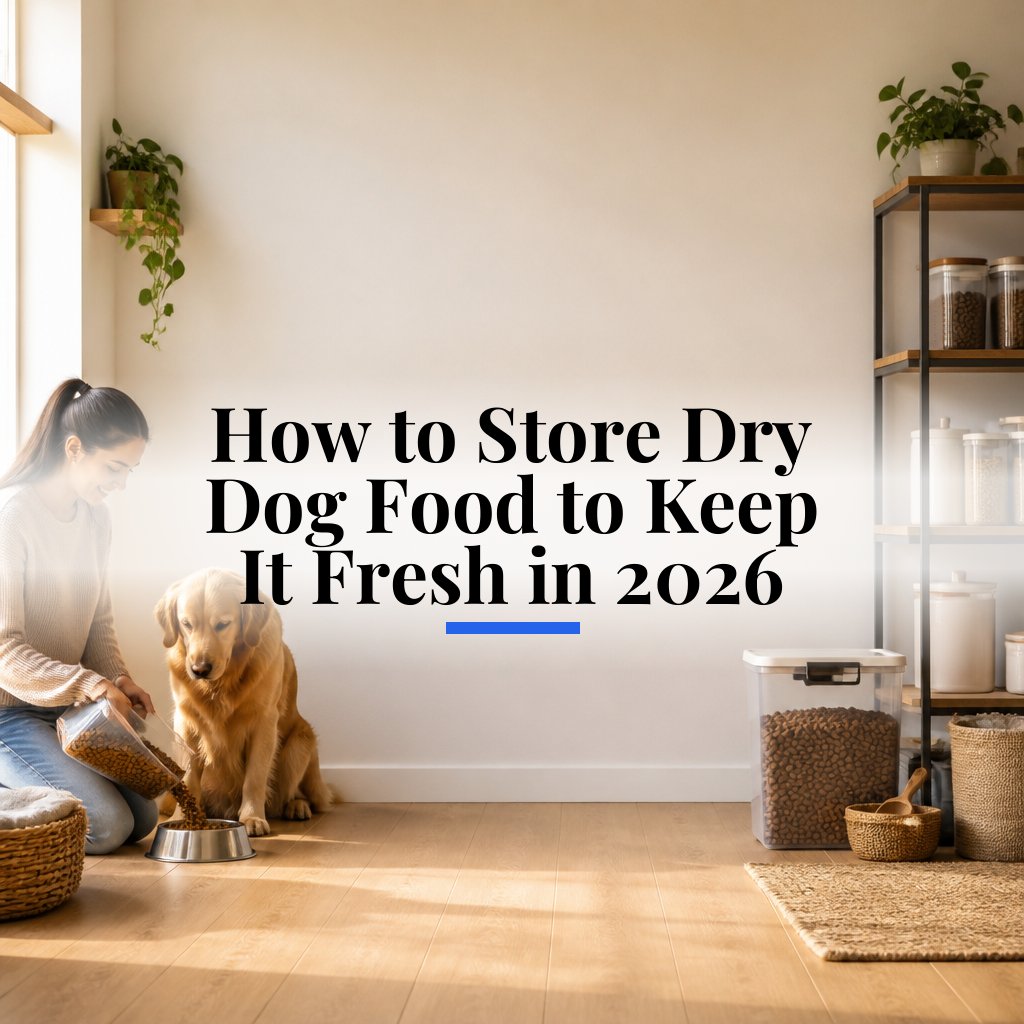
How to Store Dry Dog Food to Keep It Fresh in 2026
Last Updated: November 1, 2026
Quick Summary
To keep dry dog food fresh, store it in a clean, airtight container in a cool, dry spot away from light and heat. Choose a container sized close to the bag, roughly 10-20% larger than the food's volume. Keep the food sealed, because air, moisture and heat speed up fat oxidation.
- Oxidation from air, moisture and heat is what makes old dry dog food smell stale.
- Choose a container about 10-20% larger than the food's volume to limit headspace.
- A 30-35 lb bag typically needs roughly 12-15 gallons of container space.
- Opaque containers block light, which helps protect the fats in kibble.
- Clean the container and dry it fully before refilling to avoid rancid residue.
Table of Contents
- Why Storage Matters for Dry Dog Food Freshness
- How to Store Dry Dog Food Step by Step
- Choosing the Right Container Size
- Comparing Airtight Pet Food Containers
- How Long Dry Dog Food Lasts After Opening
- Pet Food Storage Safety and Hygiene
- Get Your Storage Setup Ready With Best Online Pets Supply
- Frequently Asked Questions
Why Storage Matters for Dry Dog Food Freshness
Dry dog food rarely goes bad overnight, but once the bag is opened, it starts losing freshness through air, moisture and heat. Most owners notice the change only after the kibble smells stale or the fats turn rancid.
Dry dog food is a fat-containing product, and fats oxidize when exposed to air. That oxidation is what gives old kibble its stale, paint-like smell. Light, warmth and humidity speed the process along.
Storage also protects against pests. Weevils, moths and other insects can get into an open bag, especially in warm months.
How to Store Dry Dog Food Step by Step
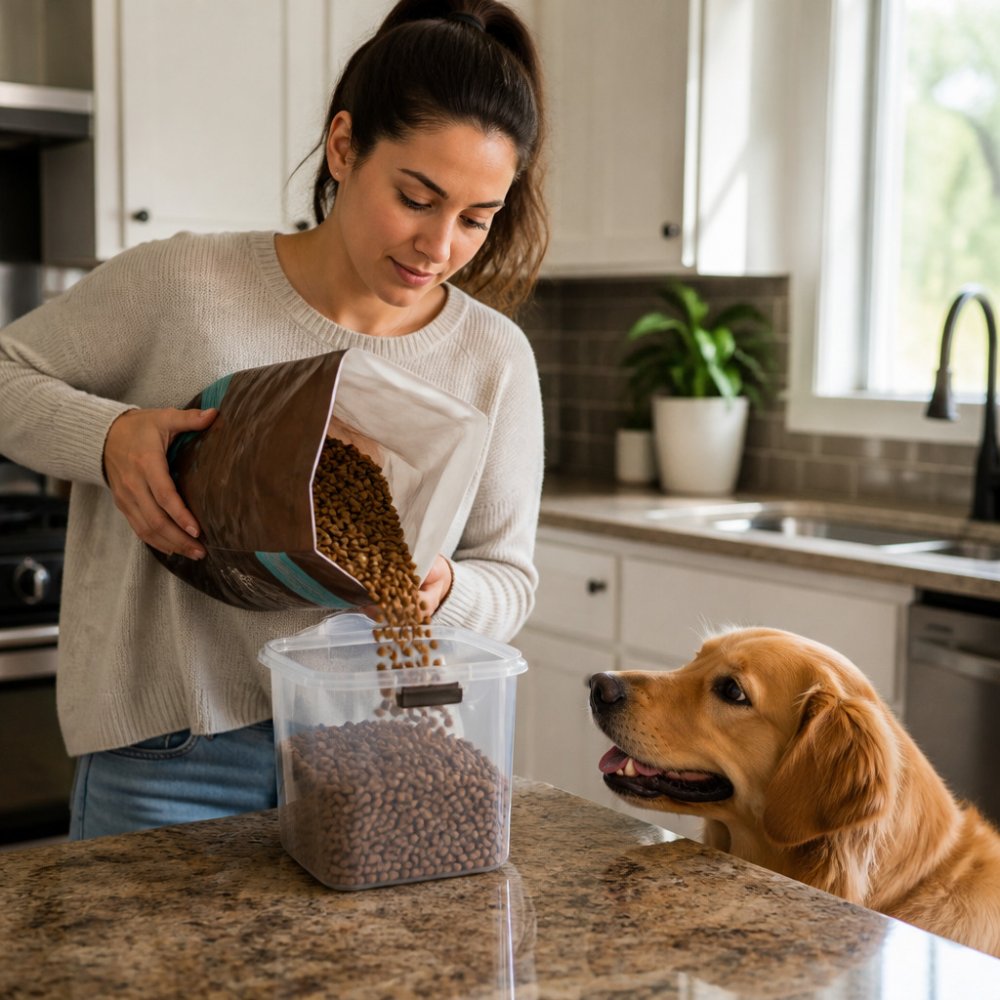
The most reliable approach is to keep the food in a clean, airtight container and avoid transferring it more than necessary. Here is a practical sequence to follow:
- Check the best-by date on the bag before you open it.
- Keep the food in its original bag until you are ready to transfer it.
- Wipe the container clean and make sure it is fully dry before adding food.
- Pour kibble in gently, leaving a small gap at the top.
- Seal the lid tightly and store the container somewhere cool and dry, away from the stove and direct sunlight.
Owners who want to save time can skip the transfer entirely. Storing the whole original bag inside a larger container is often easier.
Keeping Kibble in Its Original Bag Inside a Container
Many owners find it useful to leave the kibble in its original bag and place the bag inside a larger airtight bin. This keeps the food's labeling, lot number and feeding guide with the product, which helps if you ever need to report a problem.
Make sure the bag is folded or clipped closed before it goes into the bin. Choose a bin large enough to hold the bag without crushing it, since a flattened bag can split along its seams.
Choosing an Airtight Container
Look for a container with a lid that seals firmly and a gasket or rubber seam around the rim. Food-safe plastic or stainless steel are both common choices. Opaque containers block light, which helps protect fats in the kibble. Clear containers let you check the level at a glance but should be kept in a dark cupboard.
Some owners prefer containers with wheels or a built-in scoop. These features are convenient, though they do not change how well the seal works.
Choosing the Right Container Size
Container size matters more than many owners expect, and it is the single most common buying mistake. A container that is far too large leaves a big headspace of air above the food, which speeds up oxidation every time you open the lid.
The tricky part is that pet food bags are sold by weight (pounds) while containers are sold by volume (quarts or gallons), and the conversion depends on kibble shape and density.
A Practical Capacity Conversion Method
Rather than guessing, use this sequence to size a container correctly:
- Note the bag weight and bag dimensions. Most bags list the net weight in pounds on the front panel.
- Estimate volume from the bag. A common pattern is that a 30-35 lb bag of typical dry kibble occupies roughly 12-15 gallons (about 48-60 quarts) of space once poured loose. Smaller 15-20 lb bags usually land in the 6-9 gallon range. Treat these as starting estimates, not exact figures, because kibble density varies by formula.
- Add headroom, not too much. Choose a container about 10-20% larger than the estimated food volume so the lid closes without crushing kibble, but not so large that most of the bin is empty air.
- Match to your buying cadence. If you buy one bag at a time and finish it within about a month of opening, a container sized to that single bag is ideal. If you buy bulk, use a large bin for the reserve and a smaller airtight container for daily scooping, refilling the small one from the big one as needed.
Sizing by Common Bag Weights
Use this as a rough planning guide, then confirm against the container's listed quart or gallon capacity:
- 5-10 lb bags: look for containers in the 4-8 quart range, or a small airtight pet food container with a scoop.
- 15-20 lb bags: look for roughly 8-12 quarts (2-3 gallons) of usable volume.
- 30-35 lb bags: look for roughly 12-15 gallons (48-60 quarts) of usable volume.
- 40-50 lb bags and bulk: look for 15-20+ gallons, ideally with wheels, and plan a separate smaller daily-use container.
These ranges are estimates. Kibble shape, density, and how full you fill the bin all shift the number, so check the container's stated capacity and, when possible, read owner reviews that mention the bag size they actually fit.
Measure Your Space Before You Buy
Measure the height, width, and depth of your storage spot before ordering. Tall, narrow containers fit pantry shelves and corners; wide bins are easier to scoop from but need more floor space. If the container has wheels, add a few inches of clearance for tipping and rolling. Also confirm the lid opens fully in the space, a bin that fits but cannot open is worse than a smaller one that does.
If you buy bulk food, a larger bin makes sense, but keep a smaller container for daily use and refill it from the bin as needed. This two-container approach limits how often the main supply is opened and keeps the reserve food sealed longer.
Comparing Airtight Pet Food Containers
Several brands make airtight pet food containers, and the right choice depends on how much food you store, where you keep it, and what material you are comfortable with. The table below summarizes the options in the supplied product research.
| Container | Starting Price | Capacity Listed | Material / Seal Notes | Best For |
|---|---|---|---|---|
| Vittles Vault Outback | $36.95 | Not stated in results | Airtight, stackable design | Routine airtight storage |
| Vittles Vault Junior | $19.99 | Not stated in results | Airtight, smaller footprint | Lower-priced Vittles Vault option |
| IRIS USA Dog Food Storage Container (wheels) | Not shown | 30 lb | Wheeled bin with lid | Larger quantities of kibble |
| IRIS USA Pet Food Storage Container Combo | $30 | Not stated in results | Combo set | Owners wanting a combo set |
| Ddmommy Dog Food Storage Container | Not shown | Not stated in results | Not stated in results | Alternative to IRIS USA |
Best for: Owners who buy large bags and want wheels for easy moving should look at the 30 lb IRIS USA model.
Skip if: You only feed a small amount of food each month. A large, wheeled bin will take up space you do not need.
Material and Food-Contact Considerations
Beyond capacity and price, the material matters for freshness, cleaning, and long-term durability. Most pet food containers fall into three broad categories:
- Food-grade plastic: Lightweight, affordable, and widely available. Look for containers labeled food-safe or BPA-free. Plastic can absorb odors over time and may scratch, so clean it regularly and avoid abrasive scrubbers that create grooves where bacteria and fats can collect.
- Stainless steel: Does not retain odors or stains, cleans easily, and blocks light. It is heavier and typically more expensive, and some steel bins dent if dropped. Stainless steel is a strong choice if you switch formulas often or are sensitive to lingering smells.
- Clear plastic or glass: Lets you check the food level at a glance, but clear containers should be kept in a dark cupboard because light accelerates fat oxidation. Glass is inert and easy to clean but heavy and breakable, so it is less common for large kibble volumes.
Whichever material you choose, confirm the lid has a gasket or rubber seam that seals firmly against the rim. A tight lid matters more than the material for day-to-day freshness. Opaque containers block light, which helps protect the fats in kibble.
Some owners prefer containers with wheels or a built-in scoop. These features are convenient, though they do not change how well the seal works. If you plan to store the food in its original bag inside the bin, check that the interior dimensions fit a folded bag without crushing it.
How Long Dry Dog Food Lasts After Opening
Most manufacturers print a recommended use-by window on the bag. Once the bag is opened, the food stays at its best for a shorter period than an unopened bag does. Keeping it sealed in a cool, dry place extends that window.
Watch for signs that the food has gone stale: a sour or rancid smell, a change in color, clumping from moisture, or visible insects. Our guide to signs of expired pet food walks through how to recognize each one.
Because freshness depends on the specific food and storage conditions, check the packaging for guidance and contact the manufacturer with questions about a particular product. You can also learn how to avoid expired stock in our guide to avoiding expired pet food online.
Pet Food Storage Safety and Hygiene
Clean the container regularly. Residual fat and crumbs can turn rancid and attract pests. Wash the container with warm, soapy water, rinse it well and dry it completely before refilling.
Keep the storage area dry. Moisture encourages mold and clumping. Do not store food in a garage or shed where temperatures swing widely.
Also keep containers out of reach of curious pets and children. A sealed lid is not a child-resistant closure, so store food where it cannot be knocked over.
Get Your Storage Setup Ready With Best Online Pets Supply
Once you know the container size and seal you need, the next step is getting the right supplies. Best Online Pets Supply offers an extensive range of pet care products for dogs and cats, and free shipping on qualifying orders, which makes it convenient to restock heavy bags from home.
Frequently Asked Questions
What is the best way to store dry dog food to keep it fresh?
Keep dry dog food in a cool, dry place away from heat, sunlight and humidity. The most reliable method is to keep the food in its original bag, fold the top closed, and place that bag inside an airtight container. Clean the container before each refill and avoid topping up old kibble with fresh kibble, so the oldest food gets used first.
Should dry dog food stay in its original bag inside a storage container?
Yes, many owners find this the simplest approach. The original bag carries the batch number, best-before date and feeding guidance, which helps if you need to check a product. Keeping the bag inside an airtight container adds a second barrier against moisture, pests and odour. Roll the bag tightly, seal it with a clip, and place it inside the container.
How long does dry dog food stay fresh after opening?
Dry dog food is often best used within about six weeks of opening, though the exact window depends on the formula, storage conditions and the manufacturer's guidance printed on the bag. Check the bag for a recommended use-by period after opening. Signs of spoilage include a stale or rancid smell, visible oil on the kibble, clumping from moisture, or mould.
What size pet food storage container do I need?
Choose a container that holds your dog's food for about two to four weeks, so you are not repeatedly exposing the kibble to air. Dry dog food is commonly sold in bags of several pounds, so compare container capacity in pounds with the bag weight you buy. A container that is too large leaves more air around the food, while one that is too small forces you to store bags loosely.
AAFCO pet food labeling guidance