 Listicle
High Quality Pet Supplements for Immunity: 2026 Guide
Table of Contents
- How the Canine and Feline Immune System Works
- Signs of a Weak Immune System in Pets
- Key Nutrients That Support Pet Immune Health
- What Pet Immunity Supplements Can and Cannot Do
- How to Improve Pet Immune Health: Quality and Selection
- Top High Quality Pet Supplements for Immunity
- Drug Interactions and Species-Specific Safety Considerations
- Frequently Asked Questions
Last Updated: October 19, 2026
How the Canine and Feline Immune System Works
Your pet's immune system is a complex network of cells, tissues, and organs working together to protect against infection and disease. When functioning well, it identifies harmful invaders like bacteria and viruses, then neutralizes them before they cause serious problems. Both dogs and cats rely on this system to maintain health throughout their lives.
The immune system has two main components: innate immunity and adaptive immunity. Innate immunity is your pet's first line of defense, it responds immediately to threats without prior exposure. Adaptive immunity develops over time as your pet encounters different pathogens and builds specific defenses against them.
Supporting immune health means giving your pet's body the nutrients and conditions it needs to mount an effective response when challenged. This is where high quality pet supplements for immunity come into play.
Signs of a Weak Immune System in Pets
A compromised immune system shows itself through recognizable patterns. Your pet may get sick more frequently than normal, catch infections that clear slowly, or struggle with recurring issues like ear infections or skin problems. These are the most obvious red flags that immune support might help.
Other signs include chronic itching or scratching, digestive upset, lethargy, or a dull coat. Some pets become more susceptible to allergies or environmental sensitivities. Older pets often show declining immune function, they recover more slowly from illness and may develop age-related health challenges.
Stress, poor diet, lack of sleep, and environmental toxins all weaken immune defenses. If your pet has recently moved, experienced a major change, or undergone surgery, immune support becomes especially valuable during recovery. Young animals in high-stress environments (shelters, multi-pet households, frequent travel) also benefit from targeted nutritional support.
Key Nutrients That Support Pet Immune Health
Vitamins and Antioxidants
Vitamin E stands out as one of the most important nutrients for immune function (Regulatory role of vitamin E in the immune system and inflammation). It protects cells from oxidative stress, damage caused by harmful molecules called free radicals. Vitamin C works similarly, supporting immune cell function and reducing inflammation. Vitamin K plays a role in immune regulation, while beta-carotene (the precursor to vitamin A) supports the health of tissues that form your pet's immune barriers.
Antioxidants are compounds that neutralize free radicals before they damage cells. Your pet's body produces some antioxidants naturally, but dietary sources provide additional protection. Selenium works with vitamin E to enhance antioxidant defenses. Together, these nutrients create a protective layer against oxidative stress that accumulates with age and environmental exposure.
Herbal Ingredients and Probiotics
Echinacea has long been used to support immune function, though its effects work best as preventive support rather than emergency treatment. Astragalus, another traditional herbal ingredient, is valued for promoting resilience and supporting the body's natural defenses. Goldenseal contains compounds that support mucous membrane health, which is part of your pet's immune barrier.
Probiotics deserve special attention because they directly support digestive health, and roughly 70% of immune function originates in the gut. Beneficial bacteria help maintain the intestinal barrier, crowd out harmful pathogens, and produce compounds that enhance immune signaling. Probiotics are particularly valuable after antibiotic use, during dietary transitions, or for pets with sensitive digestion.
What Pet Immunity Supplements Can and Cannot Do
This distinction matters. High quality pet supplements for immunity support your pet's natural defenses and help maintain wellness during challenging times. They cannot cure infections, treat diagnosed diseases, or replace veterinary care. They are not vaccines, medications, or substitutes for a healthy diet and lifestyle.
Think of immune support supplements as nutritional insurance. They provide building blocks and cofactors your pet's immune system needs to function optimally. They work best as preventive measures, given consistently before problems develop, rather than emergency interventions.
The most honest claim any supplement can make is that it provides nutrients known to support immune function. Marketing language promising to "boost immunity" or "prevent illness" crosses into medical territory. Reputable manufacturers stick to what the evidence actually supports: providing concentrated sources of vitamins, minerals, herbs, and probiotics that play roles in immune health.
How to Improve Pet Immune Health: Quality and Selection
Evaluating Ingredient Quality and Label Transparency
Start by reading the ingredient list carefully. High quality pet supplements for immunity list specific ingredients, not vague terms like "proprietary blend" or "herbal complex." You should recognize most items on the label.
Check for third-party testing verification. Reputable manufacturers have their products tested by independent labs to confirm the label matches what's actually inside the bottle. Look for certifications from organizations that verify ingredients and manufacturing standards.
Serving size and concentration also indicate quality. Some supplements provide therapeutic concentrations of key ingredients; others contain token amounts that do little. Compare the amount of active ingredient per serving across products.
Avoid products with excessive fillers, artificial colors, or unnecessary additives. If a supplement contains more filler than active ingredient, you're paying for bulk rather than benefit.
Personalized Selection by Age, Size, and Health Status
Puppies and kittens have developing immune systems that benefit from different support than adult pets. Growing animals need strong antioxidant protection and nutrients supporting tissue development.
Large-breed dogs have different nutritional needs than small breeds, including different serving sizes and sometimes different ingredient profiles. A supplement formulated for a 10-pound dog will be ineffective at the recommended dose for a 70-pound dog.
Health status matters significantly. A pet recovering from surgery needs different support than a healthy animal. Pets with known allergies should avoid supplements containing common allergens.
Your pet's diet influences which supplements make sense. A pet eating a fresh, whole-food diet may need less comprehensive supplementation than one on a standard commercial diet. Indoor cats face different seasonal and environmental stressors than outdoor dogs.
Top High Quality Pet Supplements for Immunity
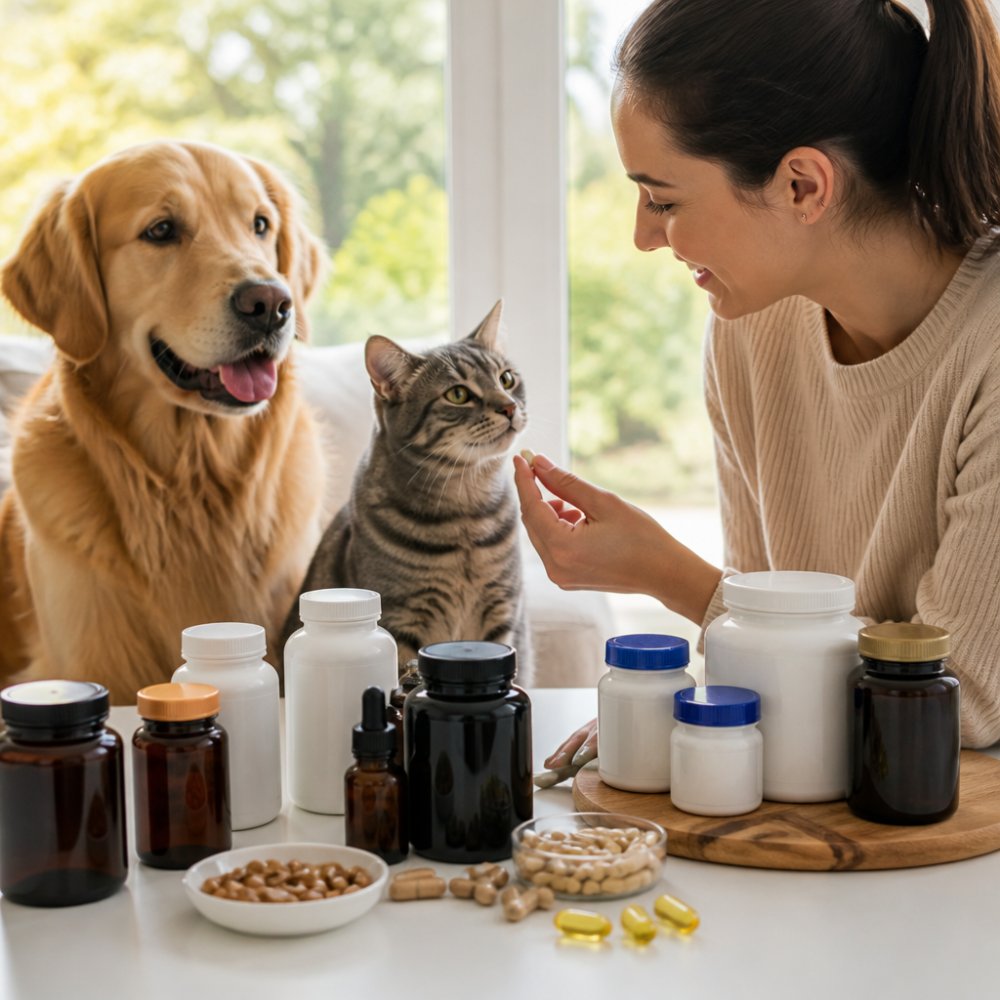
1. DMG Immunity Health for Dogs & Cats
DMG (dimethylglycine) is an amino acid compound that supports immune cell function and antioxidant defenses. This VetriScience formulation works for both dogs and cats, making it practical for multi-pet households. The product is designed specifically for immune support, not as a broad-spectrum supplement.
What makes this choice practical: it addresses a specific nutritional gap without unnecessary ingredients. The formula is straightforward, the brand has a track record in veterinary supplements, and the dosing is clear. For pet owners wanting focused immune support without complexity, this delivers.
Best for: Pet owners seeking a straightforward, dual-species immune support option that won't overwhelm with unnecessary ingredients.
2. Canine Matrix Turkey Tail Mushroom Supplement
Turkey tail mushroom contains compounds called beta-glucans that research suggests support immune function and gut health (Immune Modulation From Five Major Mushrooms: Application to Integrative Oncology). This single-ingredient approach means you know exactly what you're giving your pet. Canine Matrix specializes in mushroom supplements for dogs, and turkey tail is one of the most studied medicinal mushrooms.
The benefit of a single-ingredient product is transparency and dose control. You can adjust the amount based on your dog's response without worrying about overdosing other ingredients. Turkey tail also supports digestive health, which ties directly to immune function.
Best for: Dogs needing targeted mushroom-based immune and digestive support, especially those whose owners prefer simplicity.
3. North Hound Life Super Shrooms
North Hound Life combines multiple medicinal mushroom species, a formula approach rather than single-ingredient. This combination targets immune function and allergy resistance simultaneously. The blend includes species chosen specifically for their immune-supporting properties and traditional use.
The multi-mushroom format provides broader support than a single species alone. If your dog responds well to mushroom supplements but you want more comprehensive coverage, this offers that option. The product is designed for dogs, with species-specific dosing.
Best for: Dogs with seasonal allergies or those needing broader mushroom-based immune and allergy support.
4. Wholistic Pet Organics Ester-C
Ester-C is a buffered form of vitamin C that absorbs more efficiently than standard ascorbic acid. Vitamin C supports immune cell function and acts as an antioxidant. Wholistic Pet Organics positions this in their immune-support collection for both dogs and cats.
Ester-C is gentler on the digestive system than standard vitamin C, making it suitable for pets with sensitive stomachs. The buffered form means less acidity, which matters for pets prone to digestive upset. This works well as part of a broader immune-support strategy.
Best for: Pets needing additional antioxidant support, especially those with sensitive digestion who don't tolerate standard vitamin C well.
5. VetriScience Immune Bundle
This bundle format combines multiple VetriScience immune-support products into one package. Rather than buying individual supplements separately, the bundle provides coordinated support. VetriScience bundles are designed to work together, addressing immunity from multiple angles.
Bundle pricing typically offers better value than purchasing individual products separately. This approach suits pet owners who want comprehensive support and don't mind managing multiple products. The bundle format takes guesswork out of combining supplements effectively.
Best for: Pet owners wanting multi-faceted immune support and willing to administer multiple products for comprehensive coverage.
| Product | Best For | Key Approach | Format |
|---|---|---|---|
| DMG Immunity Health | Straightforward support, dual-species homes | Amino acid compound | Single product |
| Turkey Tail Mushroom | Focused mushroom support | Single medicinal species | Single ingredient |
| North Hound Life Super Shrooms | Allergy + immunity | Multiple mushroom blend | Multi-ingredient |
| Wholistic Ester-C | Sensitive digestion | Buffered vitamin C | Single product |
| VetriScience Bundle | Comprehensive approach | Multiple coordinated products | Bundle |
Drug Interactions and Species-Specific Safety Considerations
Before starting any supplement, discuss it with your veterinarian, especially if your pet takes medications. Some herbal ingredients can interact with pharmaceuticals.
Cats metabolize some compounds differently than dogs, which is why species-specific formulations exist (Feline drug metabolism and disposition). A supplement safe for dogs at a given dose may be unsafe for cats.
Pets with certain health conditions need careful consideration. Those with autoimmune conditions, for instance, may not benefit from aggressive immune stimulation. Pregnant or nursing pets have different nutritional needs.
Quality matters for safety as well. Contaminated or mislabeled supplements pose real risks. This is why third-party testing and transparent sourcing are not luxuries, they're essential for your pet's protection.
Supporting your pet's immune health starts with the fundamentals: quality nutrition, regular exercise, stress management, and preventive veterinary care.
Frequently Asked Questions
What ingredients should I look for in high-quality pet supplements for immunity?
Look for named, research-backed ingredients like vitamin E, vitamin C, beta-carotene, selenium, omega-3 fatty acids, and herbal options such as echinacea and astragalus. Quality supplements list specific ingredient concentrations on the label rather than vague proprietary blends. Probiotics and mushroom extracts like turkey tail also support immune function. Avoid products with excessive fillers or artificial additives. Check that the manufacturer conducts third-party testing and clearly states serving size and dosage for your pet's weight.
How do I know if my pet needs an immune system boost?
Signs your pet may benefit from immune support include frequent infections, slow wound healing, chronic diarrhea or digestive upset, excessive scratching or skin issues, lethargy, or recurring ear infections. Older pets, puppies and kittens, animals on medications, and those with chronic conditions often have higher immune demands. However, not every supplement is appropriate for every pet. Consult your veterinarian before starting any new supplement, especially if your pet is on medication or has existing health conditions.
Are immune support supplements safe for all dog and cat breeds?
Most quality immune supplements are formulated for both dogs and cats, though dosage and serving size differ by species and body weight. Some ingredients, such as certain herbs, may not suit very young puppies or kittens, pregnant or nursing animals, or pets with specific allergies. Always verify that a supplement is labeled for your pet's age and species. Check for any known drug interactions if your pet is on medications. When in doubt, ask your veterinarian whether a particular supplement is safe for your individual pet's health profile.
What is the difference between natural immune boosters and synthetic supplements?
Natural supplements derive active ingredients from plants, mushrooms, or animal sources like colostrum, while synthetic versions are chemically manufactured in a lab. Natural options may offer a broader spectrum of compounds, but synthetic versions often provide standardized, consistent dosages. Quality matters more than source: a well-researched synthetic vitamin E may outperform a poorly processed herbal extract. The best choice depends on your pet's tolerance, your preference, and what your veterinarian recommends for your pet's specific immune needs.