 How-to
Tips for Switching Pet Foods: A 7-14 Day Guide
Table of Contents
- Why a Gradual Food Transition Matters for Your Pet
- Pet Food Transition Schedule: The 7-14 Day Timeline
- How Long to Transition Dog Food: Breed and Age Considerations
- How to Transition Cat Food: Species-Specific Guidance
- Switching Pet Food Upset Stomach: Monitoring and Managing Digestive Issues
- Handling Food Refusal and Picky Eaters
- Transitioning Between Different Food Types: Wet, Dry, and Prescription Diets
- Frequently Asked Questions
Last Updated: October 12, 2026
Why a Gradual Food Transition Matters for Your Pet
Switching pet foods abruptly can trigger digestive upset, vomiting, diarrhea, and food refusal.
The transition isn't just about mixing foods, it's about giving gut bacteria time to adjust to new proteins, fats, and fiber.
Follow a structured schedule, monitor closely, and you'll switch foods successfully most of the time.
A gradual transition typically takes 7-14 days, depending on your pet's age, breed, digestive sensitivity, and the type of food you're switching to.
Pet Food Transition Schedule: The 7-14 Day Timeline
The standard approach divides the transition into four phases, each gradually increasing the new food while decreasing the old, giving your pet's digestive system time to adapt.
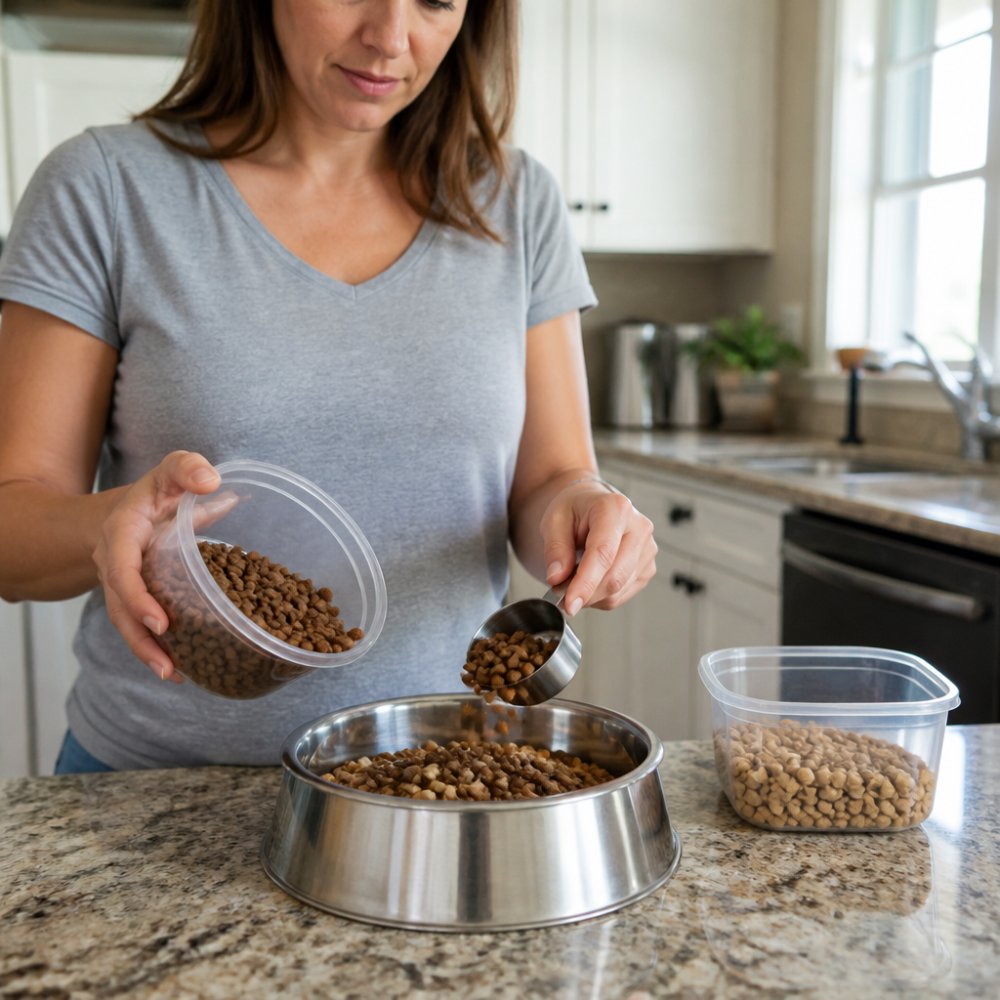
The schedule works for dogs and cats, though cats, prescription diets, and major formula changes may need the full 14 days.
Days 1-2: 75% Old Food, 25% New Food
Start with mostly the old food, keeping meals familiar while introducing small amounts of the new formula.
For one cup per meal, measure 0.75 cups old food and 0.25 cups new food, mixing thoroughly so your pet can't pick around the new pieces.
Watch your pet's appetite. Most eat normally at this ratio; some show slight hesitation due to the new smell or taste.
Days 3-4: 50% Old Food, 50% New Food
At the halfway point, equal parts old and new food get your pet used to the new formula more significantly.
Mix one cup of old food with one cup of new food, stirring well as your pet's digestive system adjusts to new proteins and nutrients.
Some pets show mild digestive changes here, loose stools are often normal at this stage, but monitor closely.
Days 5-7: 25% Old Food, 75% New Food
The new food now dominates the meal, and your pet should be well-adapted by now.
Use 0.25 cups old food mixed with 0.75 cups new food. Most pets show no upset at this ratio if earlier phases went well.
Continue monitoring appetite and stool consistency. If everything looks good, you're on track for the final switch.
Days 8-14: 100% New Food
Feed only the new food. Most pets transition smoothly by day 8; some benefit from a few more days at the 75/25 ratio if they showed sensitivity.
Watch your pet for one more week after switching to 100% new food: appetite normal, stool firm, energy levels matching pre-transition.
If your pet adjusts quickly with no upset, move faster; if issues appear, pause at the current ratio for 2-3 extra days.
How Long to Transition Dog Food: Breed and Age Considerations
Dogs are generally more adaptable than cats, but the 7-14 day schedule is a starting point, not a rule. Use these adjustments to set a realistic pace for your dog.
Puppies (Under 12 Months)
Puppies have developing digestive systems and immature gut bacteria, so a sudden switch can trigger loose stools, vomiting, or refusal to eat. Plan for a 14-day minimum; for toy breeds and puppies under 12 weeks, extend to 21 days with 3-4 days per phase. If diarrhea lasts over 24 hours, pause and consult your vet, puppies dehydrate quickly.
Adult Dogs (1-7 Years)
The standard 7-14 day schedule works for most healthy adult dogs, applying ratios to each meal. For picky eaters, add warm water or low-sodium broth during the 25% and 50% phases to mask unfamiliar smells. Avoid switching during boarding, travel, or other stressful events, stress amplifies upset.
Senior Dogs (7+ Years)
Senior dogs often have reduced digestive enzymes and underlying conditions like kidney disease or arthritis, so a 14-21 day transition is safer. With a history of pancreatitis or IBD, ask your vet for a tailored plan. Watch for weight loss, lethargy, or water-intake changes, these can signal a problem beyond food adjustment.
Large vs. Small Breeds
Large breeds (German Shepherds, Labradors, Great Danes) have higher bloat risk and sensitive stomachs, so a 14-day transition with 3-4 days per phase is prudent. Small breeds (Chihuahuas, Pomeranians, French Bulldogs) can be picky about texture changes; mix new kibble with a little wet food during the 50% phase. If a small breed refuses two consecutive meals, return to the previous ratio for 2-3 days.
Breed-Specific Notes
Some breeds are genetically predisposed to food sensitivities: Boxers and Bulldogs often do better on limited-ingredient diets with a 21-day transition, while Retrievers are prone to obesity, so measure portions carefully and don't free-feed. With a known allergy to chicken, beef, or grains, check the new food's label and transition under veterinary guidance.
Sample 14-Day Schedule for a Sensitive Adult Dog
- Days 1-3: 75% old, 25% new
- Days 4-6: 50% old, 50% new
- Days 7-9: 25% old, 75% new
- Days 10-14: 100% new
If loose stools appear, stay at the current ratio for 3 extra days; if vomiting occurs more than once, pause and consult your vet. Never rush a sensitive dog.
How to Transition Cat Food: Species-Specific Guidance
Start slowly, cats often refuse meals that change too dramatically. Mix new food with old thoroughly so the new smell is less obvious.
Use the same four-phase schedule as dogs, but extend each phase by one day:
- Days 1-3: 75% old, 25% new
- Days 4-6: 50% old, 50% new
- Days 7-10: 25% old, 75% new
- Days 11-14+: 100% new food
Cats with sensitive stomachs or on prescription diets should stay at each ratio 3-4 days; some need 21 days to fully adjust.
Watch the litter box closely, cats hide digestive upset better than dogs. Loose stools or reduced appetite mean slow down.
Switching Pet Food Upset Stomach: Monitoring and Managing Digestive Issues
Digestive upset during a food transition is common but manageable. Your job is to tell normal adjustment from a real problem needing veterinary attention.
What Digestive Changes Are Normal
Mild loose stools during days 3-7 don't mean the food is wrong, they mean your pet's digestive system is adjusting to new ingredients.
A single vomiting episode might be normal, especially after eating too quickly. If it happens once and your pet acts normal, continue at the same pace.
Slightly softer stool that firms up within a day or two, and reduced appetite for one meal, are normal as your pet adjusts to the new smell and taste.
When to Slow Down or Pause the Transition
If your pet vomits more than once, pause for 2-3 days at the current ratio, then resume more slowly.
If your pet refuses meals entirely, go back to the previous ratio for 3-4 days before trying again.
Persistent diarrhea, repeated vomiting, or loss of appetite mean slow down, not stop. Give your pet more time at each stage.
When to Contact Your Veterinarian
Lethargy, appetite loss over 24 hours, or blood in stool all require veterinary attention, these aren't normal transition symptoms.
With a diagnosed food allergy or sensitivity, contact your vet before starting, they may recommend a slower timeline or specific plan.
Your vet can also rule out other causes if upset seems severe, sometimes a transition coincides with unrelated illness.
Handling Food Refusal and Picky Eaters
Some pets simply refuse to eat when food changes, cats notoriously, and dogs too, especially small breeds.
If your pet refuses meals, don't force it.
Try warming the food slightly, it smells stronger and more appealing. Microwave 10-15 seconds to room temperature or slightly warmer.
Feed at consistent times, pets eat better on schedule.
If your pet refuses food over 24 hours, contact your vet, prolonged refusal in cats is especially serious.
Transitioning Between Different Food Types: Wet, Dry, and Prescription Diets
Switching between food formats, wet to dry, dry to wet, or between prescription formulas, adds complexity. The gradual mixing principle still applies, but the mechanics differ because moisture, texture, and nutrient density vary widely.
Wet to Dry Transition
Wet food is higher in moisture (75-80%) and more palatable; dry kibble is about 10% moisture and requires more chewing and digestion. A sudden switch can cause constipation or loose stools, so plan a 14-21 day transition.
Mixing method: Mix a small amount of dry kibble into the wet food.
Dry to Wet Transition
Dry to wet is usually easier because wet food is more aromatic and appealing. Most pets adapt within 7-10 days. However, wet food can cause looser stools initially due to higher fat and moisture. Monitor stool consistency.
Mixing method: Crumble dry kibble into the wet food, starting at 75% dry, 25% wet, and gradually increase the wet portion. If diarrhea occurs, slow down and add a probiotic supplement (consult your vet for a pet-specific product).
Prescription Diet Transitions
Prescription diets are formulated for specific conditions (kidney disease, urinary crystals, food allergies). Never switch to or from one without veterinary approval, your vet may recommend a longer transition (10-21 days) or specific mixing ratio.
Key steps:
- Ask your vet for a written transition plan.
- Between two prescription formulas, use the same 4-phase schedule but extend each phase by 2-3 days.
- With diabetes or pancreatitis, monitor blood glucose or symptoms closely.
- Some pets may need to stay on the old food longer if they show any digestive upset.
Mixing Tips for All Food Types
- Measure accurately: Use a kitchen scale or measuring cup, eyeballing skews ratios and slows adaptation.
- Mix thoroughly: Stir until old and new pieces are evenly distributed, or pets will pick out preferred pieces.
- Temperature matters: Warm wet food or add warm water to dry kibble to enhance aroma. Avoid microwaving, it creates hot spots.
- Consistency: Feed at the same times daily; sudden schedule changes add stress.
When to Seek Veterinary Help
If your pet refuses to eat over 24 hours (cats) or 48 hours (dogs), or you see persistent vomiting, diarrhea, or blood in stool, contact your vet, these may indicate food intolerance or an underlying condition.
Frequently Asked Questions
How long does it take to gradually change dog food?
Most dogs transition successfully over 7-14 days. Start with 75% old food and 25% new food for the first two days, then gradually shift the ratio until your dog is eating 100% new food by day 7-14. Puppies and senior dogs may need a slower transition (up to 14 days or longer) to avoid digestive upset. Always monitor your dog's appetite and stool consistency during the transition period.
What should I do if my pet gets diarrhea after switching food?
Mild loose stools during the first few days are normal as your pet's digestive system adjusts. If diarrhea persists beyond day 3 or is severe, slow down the transition by extending each phase by 2-3 days. If symptoms include vomiting, lethargy, or blood in stool, contact your veterinarian immediately. Some pets have sensitive stomachs and may need a longer 14-21 day transition or a different food formula altogether.
How should I transition my cat to a new food?
Cats are more sensitive to food changes than dogs and often require a slower transition. Begin with 90% old food and 10% new food for days 1-3, then gradually increase the new food ratio over 10-14 days. Cats may refuse new food initially, so mix the foods thoroughly and offer the blend at regular feeding times. If your cat refuses to eat, consult your veterinarian before continuing the transition.
Can I switch my pet's food suddenly?
Switching pet food suddenly can cause digestive upset, including loose stools, vomiting, and loss of appetite. A gradual transition allows your pet's digestive system to adapt to the new food formula. Even if your pet seems healthy, a gradual 7-14 day transition is recommended to minimize discomfort and ensure your pet accepts and tolerates the new diet properly.