 Comparison
Premium vs Standard Pet Food: What Matters Most
Table of Contents
- Premium Pet Food vs Standard Brands: Key Differences
- Ingredient Quality and Sourcing
- How to Read Pet Food Labels
- Best Pet Food for Sensitive Stomachs
- Nutritional Benefits and Health Outcomes
- Price Considerations and Value
- Which Option Is Right for Your Pet
- Frequently Asked Questions
Last Updated: October 8, 2026
Premium Pet Food vs Standard Brands: Key Differences
When you're standing in the pet supply aisle, or scrolling through options online, the price gap between premium and standard pet food can feel shocking. A bag of standard kibble might cost half the price of a premium option. But that price difference reflects real distinctions in how these foods are made, what goes into them, and what they deliver for your pet's health.
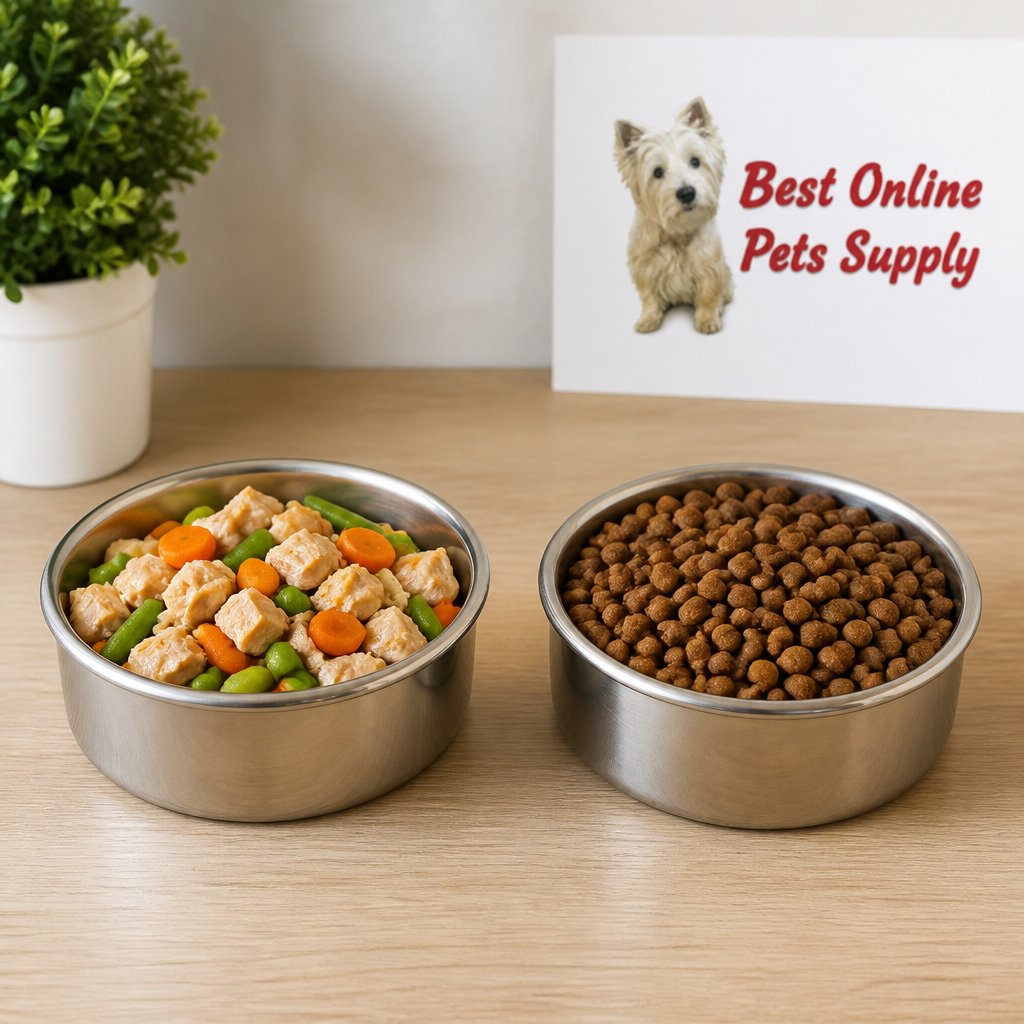
Premium pet food vs standard brands comes down to ingredient sourcing, manufacturing standards, and nutritional density. Premium brands typically use whole meat proteins, named animal sources, and minimal fillers. Standard brands often rely on meat by-products, grain-based fillers, and synthetic nutrients added at the end of production.
The practical question isn't whether premium is always better, it's whether the difference matters for your specific pet. A healthy adult dog with a strong digestive system may thrive on quality standard food. A senior dog with a sensitive stomach or a young dog with growth needs might show dramatic improvements on premium nutrition.
At Best Online Pets Supply, we help pet owners navigate this choice by focusing on transparency around ingredient quality and nutritional outcomes. Our extensive range includes healthy pet options, so you can match the nutrition level to your pet's actual needs.
Below, we'll break down exactly what separates these categories, how to read labels to spot the real differences, and how to determine which approach makes sense for your dog or cat.
Ingredient Quality and Sourcing
The ingredient list is where premium and standard foods diverge most visibly. Premium brands lead with named meat proteins, "chicken," "beef," or "salmon", as the first ingredient. Standard brands often list "meat meal" or "meat by-products," which are rendered animal parts of unknown origin and quality.
Named meat sources matter because you know what your pet is eating. A premium kibble listing "chicken" contains actual chicken meat. "Chicken meal" is dehydrated chicken parts, less desirable but still identifiable.
Premium brands also tend to source from suppliers they can verify. Many publish information about where their proteins come from, whether they use human-grade ingredients, and what quality controls they follow. Standard brands rarely provide this level of transparency.
Fillers represent another key difference. Premium foods use minimal grain or plant-based fillers. When grains appear, they're whole grains like brown rice or oats. Standard brands often rely heavily on corn, corn meal, or wheat as cheap volume fillers that contribute calories but minimal nutrition.
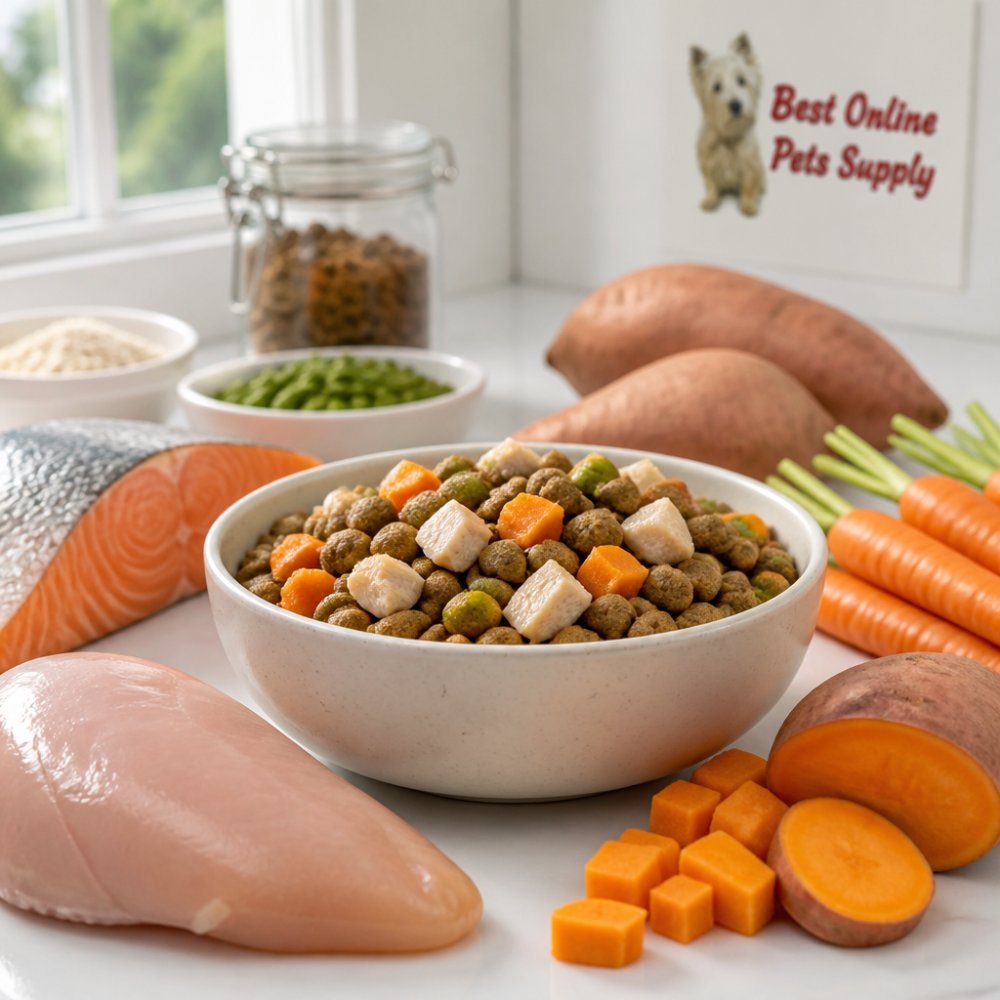
Premium brands often cost more partly because they use ingredients that are more expensive to source and process. Because the food is more nutrient-dense, your pet needs smaller portions to meet their nutritional needs, so a pricier bag sometimes lasts longer than you'd expect.
How to Read Pet Food Labels
Pet food labels are deliberately complex, but three sections tell you almost everything you need to know: the ingredient list, the guaranteed analysis, and the feeding guidelines.
The ingredient list appears in descending order by weight. This matters because the first five ingredients make up the bulk of what your pet eats. A premium food lists meat proteins first. A standard food lists grains or by-products first.
Watch for vague terms. "Animal by-products" tells you nothing. "Chicken by-products" is slightly better, at least you know the source animal. "Chicken meal" is dehydrated chicken and is acceptable in premium foods. But the more specific and recognizable the ingredient, the higher the quality signal.
The guaranteed analysis shows minimum protein, fat, and fiber percentages, plus maximum ash content. Premium foods typically guarantee higher protein (25-35% for adult dogs) and lower ash (less than 6%). Standard foods often hit minimum thresholds (18-22% protein) and higher ash (7-9%), which indicates more filler material.
Ash is particularly revealing. It's the mineral residue left after burning the food. High ash means the food contains more indigestible material, often from low-quality grains or by-products.
The feeding guidelines show portion size. This is where premium foods prove their value. If a premium food recommends 1.5 cups daily and a standard food recommends 3 cups, the premium food is twice as nutrient-dense. You're not actually paying more per meal; you're paying for efficiency.
Best Pet Food for Sensitive Stomachs
If your pet has a sensitive stomach, the difference between premium and standard food becomes immediately obvious. A dog with digestive issues needs food that's easy to break down and uses ingredients their system recognizes.
Best pet food for sensitive stomachs typically features limited ingredients, named protein sources, and minimal fillers. Premium brands designed for sensitive digestion often exclude corn, wheat, and soy, common irritants, and use digestible proteins like chicken, fish, or lamb.
Standard foods for sensitive stomachs exist, but they're less consistent. Because standard foods rely on cheaper ingredients, they may contain multiple potential irritants even if the label says "sensitive stomach formula." You end up playing trial-and-error longer.
The real advantage of premium options here is ingredient consistency. When a premium brand says "limited ingredient formula," they mean it, usually 5-8 core ingredients, all clearly identified. Your pet's digestive system adapts to these familiar proteins and carbohydrates, and inflammation typically decreases within 2-3 weeks.
For pets with sensitivities, the premium investment often pays for itself through reduced vet visits for digestive issues, fewer days of discomfort, and less food waste when your pet actually tolerates what you're feeding them.
Nutritional Benefits and Health Outcomes
Premium foods deliver higher nutrient bioavailability, meaning your pet's body actually absorbs and uses more of what's in the bowl. Standard foods contain the nutrients, but your pet's digestive system struggles to break down and absorb them efficiently.
This shows up in measurable ways. Dogs on premium food typically have shinier coats, healthier skin, and more stable energy levels. Their stool is smaller and firmer, another sign of efficient digestion. Senior dogs often show improved mobility and mental clarity on premium nutrition because they're absorbing more joint-supporting nutrients and omega fatty acids.
The research here is limited, pet nutrition studies are less rigorous than human nutrition studies, but veterinarians often report that pets transition from standard to premium food show improvements in coat quality, weight stability, and digestive health within weeks.
Standard foods meet baseline nutritional requirements. They keep your pet alive and functioning. But they don't optimize for long-term health the way premium foods do. Think of it like the difference between a diet that prevents malnutrition and a diet that supports thriving.
For young dogs during growth phases and senior dogs managing age-related changes, premium nutrition often prevents or delays health problems. A puppy on premium food may develop stronger bones and joints. A senior dog on premium food may maintain muscle mass and cognitive function longer.
Price Considerations and Value
Premium pet food costs more per bag. But per-meal cost tells a different story. Because premium food is more nutrient-dense, you feed less. A premium food at twice the price per pound often costs the same or less per day than standard food.
The real value question depends on your pet's life stage and health status. A young, healthy dog with no digestive issues may do perfectly well on quality standard food. A senior dog, a dog with allergies, or a dog recovering from illness benefits measurably from premium nutrition.
Best Online Pets Supply makes premium options accessible through free shipping on orders over $99, which removes the convenience penalty many pet owners face when switching to better nutrition. You're not choosing between premium quality and free delivery, you can have both.
Consider the total cost of pet ownership. A premium food that prevents one expensive vet visit for digestive issues, allergic reactions, or nutritional deficiencies has paid for itself many times over. Standard food saves money upfront but may cost more in vet bills later.
| Factor | Premium Brands | Standard Brands |
|---|---|---|
| First Ingredient | Named meat (chicken, beef) | Meat meal or by-products |
| Protein Level | 25-35% | 18-22% |
| Fillers | Minimal, whole grains | Corn, wheat, soy |
| Ash Content | Under 6% | 7-9% |
| Daily Portion | 1-2 cups | 2-3 cups |
| Cost Per Day | Higher per bag, lower per meal | Lower per bag, higher per meal |
| Best For | Sensitive stomachs, senior dogs, growth phases | Healthy adults with strong digestion |
Which Option Is Right for Your Pet
The choice between premium and standard pet food depends on three factors: your pet's health status, their age, and your budget for total pet care.
Choose premium if: Your pet has a sensitive stomach, is a senior dog or cat, is in a growth phase (puppy or pregnant), has a history of allergies, or shows signs of nutritional deficiency (dull coat, low energy, digestive issues).
Standard food works if: Your pet is a healthy adult with no digestive sensitivities, maintains ideal weight easily, and shows no signs of nutritional issues.
The mistake most pet owners make is choosing based on price alone. A slightly more expensive premium brand often costs less per meal than a cheap standard brand because of portion differences. Compare cost per day, not cost per bag.
At Best Online Pets Supply, we stock both premium and standard options because we know different pets have different needs. Our team can help you identify which nutrition level makes sense for your pet's specific situation.
The goal isn't to sell you the most expensive food. It's to match your pet with nutrition that keeps them healthy, prevents expensive vet visits, and fits your budget. That might be premium, standard, or a combination depending on your pet's needs.
Choosing the right pet food requires understanding what you're actually paying for. Premium and standard brands serve different purposes, and the best choice depends on your pet's health, age, and digestive needs.
Frequently Asked Questions
What are the main differences between premium pet food and standard brands?
Premium pet food typically uses higher-quality protein sources, fewer fillers, and more digestible ingredients than standard brands. Premium options often list whole meat as the first ingredient, while standard brands may rely on meat by-products or grain fillers. Premium formulas also tend to have more precise nutrient balancing and fewer artificial additives. The difference affects how efficiently your pet's body processes the food and absorbs nutrients.
Does premium pet food actually improve a pet's long-term health?
Pets fed premium nutrition often show visible improvements in coat quality, energy levels, and digestion within weeks. Over the long term, better-quality food can support healthier weight management, stronger immune function, and potentially fewer digestive issues. However, individual results vary based on your pet's age, breed, and existing health conditions. Consulting your veterinarian about your specific pet's needs helps determine whether premium options will deliver measurable benefits.
How do I know if a pet food brand is truly premium or just marketing?
Read the ingredient list carefully: premium brands list whole meat sources first, not by-products or meal. Check for named protein sources (chicken, beef, fish) rather than vague terms like 'meat meal.' Look for the AAFCO statement confirming nutritional completeness. Avoid artificial colors, flavors, and preservatives. Research the brand's sourcing practices and whether they conduct quality testing. Premium brands are typically transparent about their ingredient sourcing and manufacturing standards.
Are there specific health benefits to feeding premium food to pets with sensitive stomachs?
Yes. Premium formulas for sensitive stomachs typically use limited, easily digestible protein sources and avoid common allergens like corn, wheat, and soy. They often include added probiotics and digestive enzymes to support gut health. High-quality fats and fiber support nutrient absorption without causing digestive upset. Pets with sensitivities often respond well to premium options because the cleaner ingredient profile reduces inflammation and digestive stress compared to standard brands with fillers and artificial additives.
What should I look for on a pet food label to determine quality?
Start with the first three ingredients: they should be named protein sources (chicken, salmon, beef), not by-products or meals. Check the crude protein percentage (typically 25-30% for dogs, 30-40% for cats). Look for named fat sources and avoid artificial preservatives like BHA or BHT. Verify the AAFCO statement confirming the food is complete and balanced for your pet's life stage. Avoid vague terms like 'meat meal' or 'animal by-products.' The more transparent and specific the label, the higher the quality.