 Listicle
Buy Organic Cat Food Online: 7 Best Options
Table of Contents
- Why Buy Organic Cat Food Online
- Quick Comparison: Organic Cat Food Options
- Best Grain Free Cat Food for Feline Nutrition
- Benefits of Organic Cat Food: What Sets It Apart
- How to Choose Healthy Cat Food for Your Pet
- Step 1: Find the AAFCO Nutritional Adequacy Statement
- Step 2: Read the Guaranteed Analysis and Ingredient Panel Together
- Step 3: Compare Cost Per Day, Not Price Per Bag
- Step 4: Factor In Shipping, Subscriptions, and Format Trade-offs
- Step 5: Match the Formula to Your Cat, Not the Marketing
- Evaluating Ingredient Quality and Sourcing
- Understanding Life-Stage Nutrition
- Transitioning Your Cat to Organic Food
- Food Safety, Storage, and Reliable Delivery
- Frequently Asked Questions
Last Updated: October 5, 2026
Why Buy Organic Cat Food Online
Buying organic cat food online simplifies access to high-quality nutrition without leaving home.
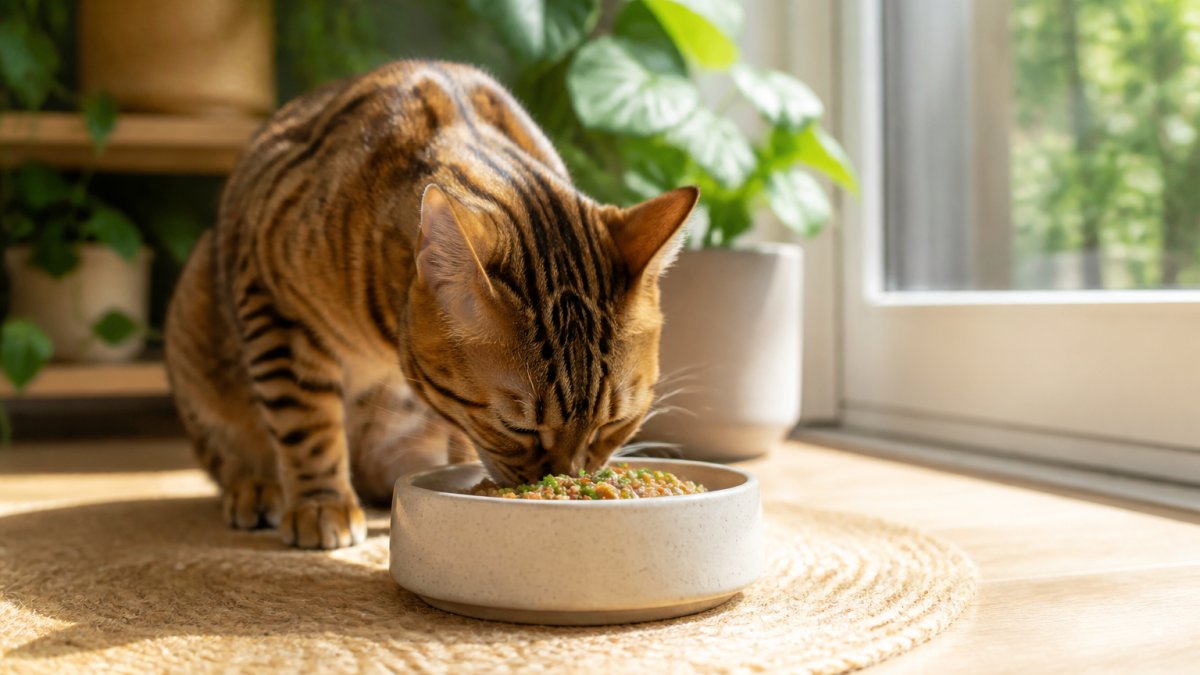
The real advantage is consistency: when you order organic cat food online, you control what arrives and when, instead of settling for local stock.
At Best Online Pets Supply, our range of high-quality pet care products supports your cat's health without the guesswork.
Organic cat food matters because cats are obligate carnivores: they need meat-based protein and minimal processing to thrive.
Quick Comparison: Organic Cat Food Options
When shopping for organic cat food online, you'll encounter several formats, each with distinct trade-offs.
Dry kibble offers convenience and cost efficiency: it stores easily, requires no refrigeration, and costs less per serving.
Wet and canned food provides higher moisture content, closer to what cats eat in nature.
Raw and freeze-dried formats deliver nutrient density and minimal processing, but require more storage space and careful handling.
| Format | Storage | Cost Per Serving | Best For | Key Consideration |
|---|---|---|---|---|
| Dry kibble | Room temperature | Lowest | Budget-conscious owners | Lower moisture content |
| Wet/canned | Refrigerated after opening | Moderate | Cats needing hydration | Shorter shelf life |
| Raw/freeze-dried | Freezer or pantry | High | Nutrient-dense preference | Handling and safety |
| Fresh delivery | Refrigerated | Highest | Convenience + quality | Subscription commitment |
Best Grain Free Cat Food for Feline Nutrition
Grain-free formulas remove corn, wheat, and soy, ingredients that don't match feline nutritional needs.
When evaluating grain-free options, look for named meat sources in the first three ingredients. "Chicken" or "beef" as the primary ingredient signals higher meat content.
The common mistake is assuming grain-free automatically means high-quality. Some grain-free foods substitute grains with excessive legumes or peas, which can still create digestive stress in sensitive cats.
Benefits of Organic Cat Food: What Sets It Apart
Most articles on organic cat food repeat the same benefit list, no pesticides, no additives, better ingredients, without explaining what "organic" actually means on a label. That gap matters, because the word is used loosely in pet food marketing, and understanding certification separates a real organic purchase from a premium-priced conventional one.
What Organic Certification Actually Requires
In the United States, the USDA National Organic Program sets the legal definition. To carry the USDA Organic seal, a cat food must meet one of three tiers:
- "100% Organic", every ingredient (excluding water and salt) is certified organic.
- "Organic", at least 95% of ingredients by weight (excluding water and salt) are certified organic.
- "Made with Organic Ingredients", at least 70% of ingredients are certified organic, but the product cannot display the USDA seal.
Anything below 70% cannot use the word "organic" on the principal display panel at all. That threshold is the first filter a shopper can apply: if the front of the bag says "organic" but there's no seal and no certifier listed, the claim is marketing, not certification.
Certification also covers the livestock side. Organic meat sources must be raised without routine antibiotics or added growth hormones, fed organic feed, and given outdoor access appropriate to the species. Synthetic pesticides and fertilizers are prohibited on organic crops.
"Natural" Is Not "Organic"
This is the most common point of confusion. AAFCO defines "natural" for pet food as having no synthetic ingredients, but says nothing about pesticide use, farming practices, or antibiotic history. A chicken can be raised in a conventional feedlot, treated with antibiotics, and still yield "natural" cat food. "Organic" is a verified, audited standard; "natural" is a labeling convention. If a product leans on "natural" while avoiding "organic," the manufacturer likely cannot meet the certification bar.
How to Verify a Claim Before You Buy
Online shopping makes verification harder because you can't turn the bag over in a store. A short checklist closes most of the gap:
- Look for the seal. The USDA Organic seal (or the equivalent in your country, such as the EU organic leaf or Canada Organic logo) must appear on the packaging image. Retailers who hide the back panel are a yellow flag.
- Identify the certifier. Reputable brands name their certifying agent, for example, Oregon Tilth, CCOF, or Quality Assurance International. A named certifier is auditable; a vague "certified organic" claim is not.
- Check the ingredient panel. Organic ingredients are marked with the word "organic" in the list (e.g., "organic chicken," "organic sweet potato"). If only one or two ingredients carry the label, the product is likely in the 70-95% tier.
- Cross-reference the brand's own site. USDA Organic Program, understanding the USDA organic label publishes the labeling rules; a brand that contradicts them in its own marketing is worth skipping.
What Organic Does and Doesn't Guarantee
Organic certification is a farming and processing standard, not a nutritional one. An organic cat food can still be nutritionally incomplete, too high in carbohydrates for an obligate carnivore, or contain legumes or fillers that upset a sensitive cat's digestion.
That's why the next step after confirming a seal is reading the AAFCO nutritional adequacy statement and the guaranteed analysis. Organic is a meaningful filter, but it's the first filter, not the last.
How to Choose Healthy Cat Food for Your Pet
Choosing healthy cat food comes down to three questions: Is it nutritionally complete for my cat's life stage? Are the ingredients what they claim to be? And does the total cost make sense for how I actually feed my cat?
Step 1: Find the AAFCO Nutritional Adequacy Statement
Every complete cat food sold in the U.S. carries a statement confirming it meets AAFCO nutrient profiles, reading something like: "Animal feeding tests using AAFCO procedures substantiate that [Product] provides complete and balanced nutrition for [life stage]."
Two things matter in that sentence:
- "Complete and balanced", the food can serve as the sole diet. Treats, toppers, and some raw or freeze-dried products are labeled "for intermittent or supplemental feeding only" and cannot.
- The life stage, "growth," "adult maintenance," "all life stages," or "growth and maintenance." "All life stages" must meet the stricter growth profile, which is why it's often the safest single-bag choice in a multi-cat home.
If you can't find the statement on the product page or packaging image, that's a real gap. Ask the retailer or the brand directly before buying.
Step 2: Read the Guaranteed Analysis and Ingredient Panel Together
Minimum protein and fat percentages in the guaranteed analysis are expressed on a moisture basis, making dry and wet food hard to compare directly.
On the ingredient panel, look for a named animal protein in the first position, chicken, turkey, salmon, beef. "Chicken meal" is a concentrated protein source and is not inherently inferior; "meat meal," "poultry by-product meal," or "animal digest" are the vague terms to scrutinize.
Step 3: Compare Cost Per Day, Not Price Per Bag
Headline prices mislead because package sizes and feeding amounts vary enormously. The useful number is cost per day for your cat's weight.
A simple method:
- Note the bag or case price and total weight (or total ounce count for wet food).
- Find the manufacturer's feeding guideline for your cat's weight, a 10 lb adult cat typically eats about 1/2 to 2/3 cup of dry food or 5-6 oz of wet food per day, depending on calorie density.
- Divide total weight by daily amount to get days per package, then divide price by days.
A 12 lb bag at $60 that lasts 45 days costs about $1.33/day. A $45 case of 24 five-ounce cans that lasts 20 days costs about $2.25/day. The wet food is nearly 70% more per day, a real number that matters more than the sticker price.
Step 4: Factor In Shipping, Subscriptions, and Format Trade-offs
Online ordering adds variables that change the math:
- Free-shipping thresholds. A retailer offering free shipping over a set order value can make larger, less frequent orders cheaper, but only if the food stores well.
- Subscription discounts. Many direct-to-consumer brands offer 5-15% off recurring orders. That discount can erase the shipping advantage of a one-off purchase, but it also locks you into a cadence. Check whether you can skip, pause, or cancel without penalty.
- Format storage costs. Dry kibble stores for months in an airtight container; opened canned food lasts 3-4 days refrigerated; raw and freeze-dried formats need freezer space. A cheaper format that spoils before your cat finishes it is not actually cheaper.
Step 5: Match the Formula to Your Cat, Not the Marketing
Life stage is the first filter, kittens need the growth profile, adults need maintenance, seniors often benefit from higher-quality protein and joint support.
A practical approach: pick two or three candidates that pass the AAFCO, ingredient, and cost-per-day checks, then transition slowly and let your cat's coat, energy, and litter box tell you which one works. Nutrition labels narrow the field; your cat picks the winner.
Evaluating Ingredient Quality and Sourcing
Start with the ingredient list, not the front-of-bag marketing. The first ingredient should be a named meat source, chicken, beef, fish, or turkey.
Check the protein percentage: cats need a minimum of 26% protein for adults, higher for kittens and seniors, so look for foods with 30-40% protein.
Examine the fat content. Cats require fat for energy and skin health, but excessive fat can lead to obesity.
Ingredient sourcing matters: organic certification verifies that meat sources meet specific standards.
Understanding Life-Stage Nutrition
Kittens, adult cats, and senior cats have different nutritional requirements. Kitten food contains higher protein and fat to support growth. Adult formulas maintain baseline nutrition.
Feeding the wrong life-stage formula creates problems. Kitten food fed to adult cats leads to obesity and nutrient imbalances. Senior food fed to young cats provides insufficient calories and protein for activity levels.
Most online retailers organize their cat food by life stage, making selection straightforward.
Transitioning Your Cat to Organic Food
Switching cat food abruptly causes digestive upset. Cats have sensitive digestive systems adapted to specific diets.
The standard transition takes 7-10 days. Start by mixing 25% new food with 75% current food for days 1-2. Increase to 50/50 on days 3-4.
Watch for digestive signs during transition. Soft stools or mild vomiting is normal.
Some cats resist new food textures.
Food Safety, Storage, and Reliable Delivery
Online ordering introduces considerations around freshness, storage, and handling that in-store shopping doesn't require.
Freshness verification starts at unboxing: check expiration dates immediately upon delivery.
Storage conditions affect food longevity.
Reliable delivery means consistent timing and condition.
When ordering, calculate your cat's consumption rate.
Handle delivery boxes carefully.
Choosing organic cat food online simplifies one of the most important decisions for your cat's health.
Frequently Asked Questions
What is the healthiest organic cat food?
The healthiest organic cat food combines real meat as the primary protein, minimal fillers, and complete-and-balanced nutrition tailored to your cat's life stage. Look for products with human-grade ingredients, no artificial colors or preservatives, and transparent ingredient sourcing. Freeze-dried raw and gently cooked options preserve nutrients better than heavily processed kibble. Check that the food meets AAFCO standards for complete nutrition. Your cat's individual needs, whether sensitive digestion, weight management, or age-specific requirements, should guide your choice.
How do I transition my cat to organic food?
Gradual transitions prevent digestive upset. Mix 25% new organic food with 75% current food for 3-4 days, then increase to 50/50 for another 3-4 days, then 75% new to 25% old for 3-4 days before switching fully. Watch for vomiting, diarrhea, or loss of appetite, signs you need to slow the transition. Some cats adjust in a week; others need 10-14 days. Consistency matters: keep meal times and portion sizes stable during the change. If your cat refuses the new food, try a different organic brand or format (wet versus dry).
Is organic cat food actually better for cats?
Organic certification means the ingredients meet specific standards for production and sourcing, but 'organic' alone doesn't guarantee better nutrition. What matters more is ingredient quality, protein content, and whether the food is complete and balanced for your cat's needs. Organic foods often use fewer artificial additives and pesticide residues, which some owners prefer for health reasons. However, a non-organic food with high-quality real meat and minimal fillers can be nutritionally superior to a lower-quality organic option. Evaluate each product on ingredient transparency and nutritional profile, not the label alone.
What should I look for when buying cat food online?
Check ingredient lists for named meat sources (chicken, fish, beef) as the first ingredient, not meat by-products. Verify the food is complete and balanced for your cat's life stage. Look for retailers offering free shipping on qualifying orders to reduce total cost. Read customer reviews for feedback on freshness, packaging, and whether the product arrived in good condition. Confirm the retailer sources directly and handles storage properly to ensure freshness. Compare delivery times and return policies, reliable shipping prevents gaps in your supply.
How does free shipping on organic cat food orders work?
Most online pet retailers offer free shipping when your order meets a minimum threshold, typically $50-$99 depending on the retailer. This encourages larger purchases but doesn't force you to buy more than your cat needs if you order regularly. Calculate your typical monthly cat food spending to see if you naturally meet the threshold. Always check the retailer's shipping policy before checkout to confirm the threshold and confirm there are no hidden delivery fees.